I’m beginning to think that the real pleasure of photography does not come from making photographs at all.
The more time I spend studying photography, the more convinced I become that context is perhaps one of the most important elements in our enjoyment of a photograph. I say this as someone who visits art galleries often and spends time reading the little captions beside the work. I want to know everything I can about the artist and the circumstances surrounding the work — whether it is painting or photography. This enhanced understanding makes the work come alive and feel more connected to my own life and experiences.
I recently heard art historian Bendor Grosvenor talking about art connoisseurship, and it inspired me to think about how we learn not simply to see a picture, but to read it and forensically examine its qualities in different ways. Enjoyment comes from learning how to truly look at creative work — not simply at what is visible inside the frame, but at the deeper story of how and why an image came into being.
A photograph can certainly be admired for its visual beauty or emotional impact alone. We can appreciate light, composition, colour, texture, timing, or technical skill. But photographs become far more exciting when we begin asking questions beyond the image itself.
- Who made this photograph?
- Why was it taken?
- What was happening at that moment?
- What relationship did the photographer have to the subject?
- Where has this image appeared, and for what purpose?
These questions transform a photograph from a static object into something alive.
What Do We Mean by “Context”?
When we talk about the context of a photograph, we are really talking about several overlapping layers.
The first is the context of the moment itself: the time, the place, the historical circumstances, and the events unfolding around the photograph. A wartime image, for example, carries a very different emotional weight once we understand the dangers, politics, and human realities surrounding it.
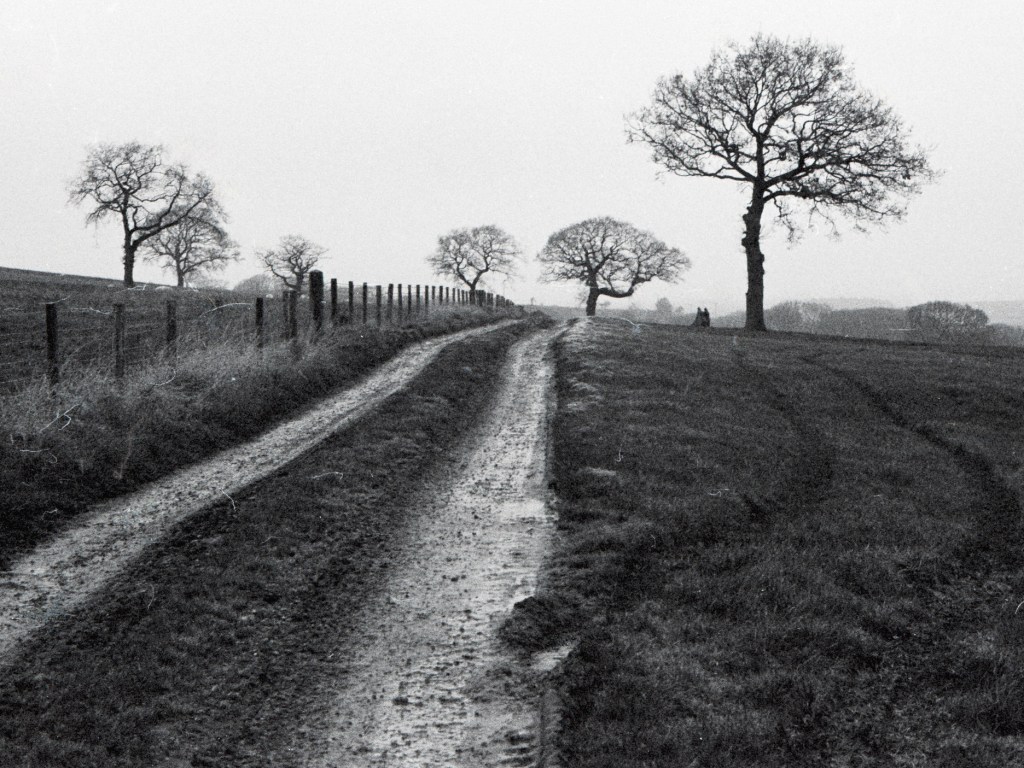
Then there is the photographer’s relationship to the scene. I spend a great deal of time walking on my local moors. It is a place where I feel peaceful and grounded. There can be wind and rain, and it is still beautiful. Moorland walking is something I have done since I was a small child, so my relationship with the moors is deeply rooted in me.
The camera, it has been said, looks two ways — both at the scene and back at the photographer. So let’s consider that within the photograph itself. Was the photographer an observer, a participant, a friend, a stranger, or perhaps even someone at risk? Understanding this relationship can radically alter the way we interpret an image.
But context does not stop with the photographer.
The viewer also brings context.
Each of us arrives carrying our own experiences, beliefs, memories, and assumptions. Two people can look at the same photograph and see entirely different things because they bring different emotional histories to the act of seeing. Sometimes a photograph resonates because it connects to a shared human experience. Sometimes our worldview changes what we notice, what we value, or what we overlook.
As someone who is frequently asked to judge photographs in competitions, I am constantly having to navigate my own emotional responses to images, responses that may or may not be shared by other people.
And then there is the context of presentation.
A photograph seen in a gallery feels different from the same photograph seen in a newspaper, a family album, an advertising campaign, or on social media. The setting changes how we “read” the image. In a gallery, we expect contemplation and interpretation. On social media, we may give an image only a fraction of a second before scrolling on.
All of these contexts shape meaning.
Learning to See Better
I increasingly enjoy looking at other people’s photographs more than making my own. In fact, I suspect that making photographs is partly valuable because it teaches us how to appreciate the work of others more deeply.
By studying photographs carefully over time, we begin to calibrate our eyes. We become more sensitive to quality, nuance, intention, and originality. We start noticing things that would once have escaped our attention.
This may be part of what Bendor Grosvenor calls connoisseurship.
Being a connoisseur is not simply about having opinions. It is about developing the ability to see more fully. It means understanding not only what a photograph looks like, but who made it, how it was made, why it matters, and what makes it distinctive.
Connoisseurship is really an act of attentive seeing.
To become experienced viewers of photography, we have to train ourselves in the art of unravelling an image through observation, curiosity, and knowledge.
And this is where context becomes so important.
The enjoyment of a photograph comes not only from what is contained within the frame, but from our understanding of how the image came to exist at all. Knowing something about the photographer’s motivations, struggles, risks, or intentions can dramatically deepen our emotional connection to the work.
Context in Exhibitions
When I visit a photographic or art exhibition, I instinctively feel that this context matters.
We expect captions, essays, catalogues, interviews, or background information to accompany the images. These materials help us enter the world of the work. They enrich our understanding and encourage us to look more carefully.
Often, the greatest pleasure comes from doing our own research — discovering the stories behind the photographs, reading about the photographers, and immersing ourselves in the wider history surrounding the images.
The photograph becomes part of a much larger human story.
Social Media and Context
Today, billions of images are uploaded online every year. Increasingly, social media has become the primary context in which photographs are viewed.
But social media strips away much of the richness that gives photographs meaning.
Images flash past detached from history, detached from authorship, detached from place and intention. We rarely know how an image was made, whether it has been manipulated, or even whether it depicts something real at all. Some images are now entirely AI-generated — pictures created without lived experience or genuine human connection behind them.
The result is that photographs can become strangely weightless.
We consume them rapidly, but rarely dwell on them deeply.
I Struggle With Photographic Competitions
If you’ve read some of my earlier posts, you’ll know that I have a slightly conflicted relationship with photographic competitions.
As a competition judge, I’m asked to explain why certain photographs “work” and to make highly subjective decisions about winners and losers. But the more I judge competitions, the more I feel that the process is inherently unfair.
Competition photographs are often stripped entirely of context.
They are presented as isolated images with little or no sense of where they came from, who made them, or why they matter. They become, in a sense, orphaned photographs.
And because context is absent, judging naturally gravitates towards the technical aspects of photography: sharpness, composition, exposure, impact, printing quality, and visual design.
Those things matter, of course. Technical excellence matters enormously.
But technical excellence alone is not the same as relevance, emotional depth, or human significance.
In open competitions especially, judges compare photographs across wildly different genres and intentions with almost no understanding of the circumstances in which the images were made. The result is that photographs are often evaluated primarily as visual objects rather than lived experiences or meaningful acts of communication.
Competitions create a very particular context with very particular rules.
Within that setting, photography can become a largely technical exercise — impressive, perhaps, but detached from the deeper human connections that make photography truly powerful.
Becoming Better Viewers
I think the question of a photograph’s relevance is deeply important.
Photography is not simply about producing attractive images. It is about seeing, understanding, remembering, communicating, and connecting.
The more I learn about photography — its history, its makers, its stories, and its contexts — the richer my experience becomes. Hopefully, I stop merely looking at photographs and begin truly encountering them.
And perhaps that is what it means to become an experienced viewer of photography.
Not just someone who sees pictures. But someone who sees through them to something deeper and beyond.
 Mark Waddington
Leave a comment