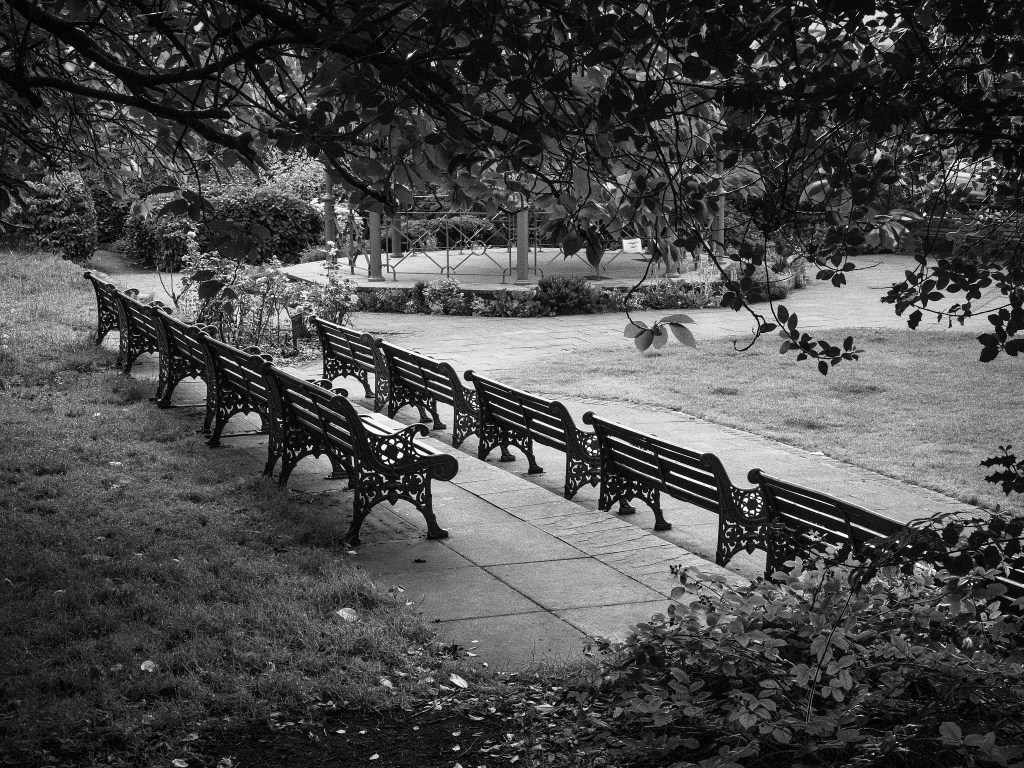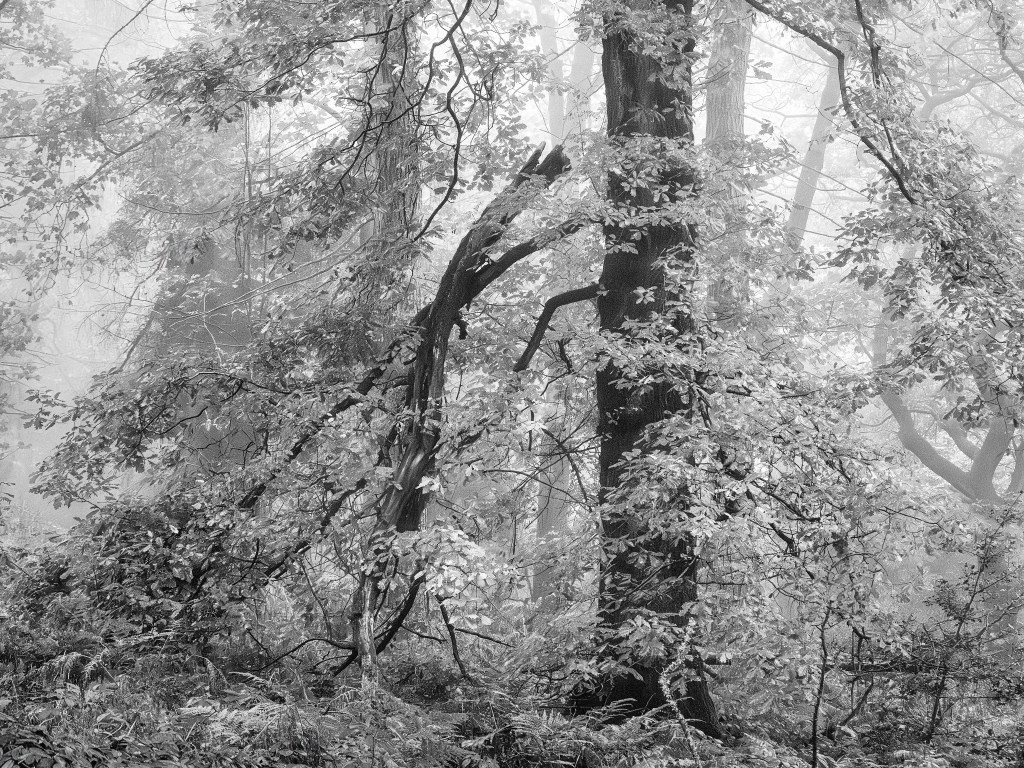
In this post, I want to talk about two aspects of photography that I believe are absolutely essential: composition and storytelling.
Let’s start with composition.
Composition is one of the few areas in photography where we have complete control. It’s where we can truly add something unique and personal — our way of seeing the world. But composition is more than just arranging shapes and lines in a pleasing way. It’s also about how we use colour, tone, and light to guide the viewer’s eye through the image. I see the use of colour and tones along with lines and shapes as all part and parcel of composition.
I like to think of composition as design — the design of a photograph. How do all the visual elements fit together? How do they work as a whole? Good composition is about what some people might describe as harmony: the way shapes, lines, tones, and colours interact to create balance, rhythm, and flow.
Now the second aspect: storytelling.
When I talk about storytelling in photography, I don’t necessarily mean showing a literal story. It’s not always about a clear narrative wihin the frame. Often, it’s about creating a sense of story, or hinting at a story — something that feels like there’s more happening beneath the surface. You can’t always explain it, but you sense it.
That subtle uncertainty is powerful. It invites the viewer in. It makes them curious and encourages them to use their imagination. For me, that’s what makes an image memorable — when it leaves space for interpretation rather than spelling everything out. If a photograph is too literal or obvious, it can end up feeling a bit contrived.
So, composition and storytelling — those are the two areas I’m constantly thinking about and practicing in my own photography (and failing most of the time).
But there’s another layer to all this — something about how we talk about photography itself.
When we try to explain concepts like composition or storytelling in words, we often end up simplifying something that’s deeply intuitive. Language helps us communicate ideas, but it can also trap us in definitions and formulas. Photography, at its core, is a visual language, not a verbal one. It’s something we need to feel rather than explain.
The moment we try too hard to define what composition “should” be or how a story “should” be told, we risk losing the magic. Creativity doesn’t live in rules — it thrives in openness and curiosity.
Maybe we need to loosen our grip a little. Instead of trying to control every element or chase a perfect formula, we can allow ourselves to respond emotionally to the scene in front of us. When we do that, photography becomes a kind of dialogue with the subconscious — a way of discovering parts of ourselves we didn’t know were there.
So perhaps what I’m really saying is this:
Let’s bring the mystery back into photography.
Let’s make it less about certainty and more about emotion, intuition, and imagination.
Let’s move away from rigid rules and embrace photography as something deeply human — something we feel our way through.
Category: photography
-

Composition and Storytelling: And a Sense of Mystery
-

Layers of Interest in a Photograph
Picking up from my last post, I’ve been thinking more about what makes a photograph interesting — and in particular, about the idea of layers of interest. We can be drawn to an image for all sorts of reasons, but I want to focus on some of the more direct, obvious qualities that make a photograph work.
The First Layer: The Subject Itself
The most immediate layer of interest is the subject. Is it inherently interesting? Does it draw attention simply because of what it is — regardless of how it’s been photographed? This is when we think of a photograph as being of something. Some subjects have an innate visual or emotional pull — a dramatic sky, a face full of character, a fleeting gesture — and that alone can make a photograph compelling.
The Second Layer: Design and Composition
Another layer of interest comes from how the photograph is designed. How has the photographer composed the image? What has been included or left out? A well-composed image can feel balanced, satisfying, and beautifully arranged.
I often think of this layer as using the scene in front of you as raw material for design. The interesting question, though, is how much that design reflects what was actually there — and how much it transforms it. Does the composition help me experience the scene more deeply, or does it pull me away from it? Does it reveal the reality of what I saw, or does it impose something artificial on top of it?
The Third Layer: Meaning and Emotion
Then there’s a deeper, more psychological layer — the one that deals with meaning. This is where metaphor, story, and emotion come into play. It’s what the photograph means rather than just what it shows.
At this level, I’m interested in the relationships within the image — between people, objects, or ideas — and in the emotions they evoke. Sometimes this layer is very direct, like the expression on someone’s face. Other times, it’s subtle, hidden in atmosphere, symbolism, or mood.
The Fourth Layer: Audience and Context
Of course, even if a photograph has a fascinating subject, a strong design, and emotional depth, that doesn’t necessarily mean people will appreciate it. Whether a photograph is seen as “good” depends so much on the audience and the context in which it’s viewed.
History is full of examples of art that was misunderstood or dismissed at first, only to be admired years later. The context of viewing — who’s looking, where, and when — can make all the difference. Finding an audience that connects with your work can be one of the hardest parts of being a photographer.
A picture that leaves people cold isn’t necessarily a failure. It might simply be waiting for the right audience — or the right moment — to be understood.
Communication and Value
I sometimes think that one of the most interesting questions about art is not whether it’s good in any absolute sense, but whether it communicates. If we see all creative work as a form of communication — and not every artist does — then perhaps the real test of value is how effectively it reaches people.
If a piece of art moves people, starts conversations, or even sells for millions, it’s clearly connecting on some level. In that sense, dismissing it as “rubbish” misses the point if its purpose is to communicate and be appreciated.
So maybe the value of a photograph doesn’t just lie in its subject, design, or meaning. Maybe it also lies in the way it speaks to others — or even just in the fact that it speaks at all. -

The Power of Intention in Photography: Thoughts from Tom Marsh’s Talk
Photographer Tom Marsh made a powerful point in a talk a heard him give last night— that intention lies at the heart of every photograph. He also demonstrated just how differently we can interpret an image once we’re given a statement of intention from the photographer. It made me wonder: is it actually helpful to know what the photographer intended, or is it better to leave interpretation completely open?
Tom, a West Yorkshire-based photographer who runs Yorkshire Photo Walks and various workshop sessions, gave a fascinating talk to Ilkley Camera Club. His presentation had two main parts.
In the first, he outlined a framework for evaluating a photograph’s qualities — looking at the subject, the visual design (the composition, colour, and form), and the content or message. The second half focused on something more philosophical: the photographer’s intention. Tom showed us how a simple statement of intent can radically alter the way we read a photograph.
I completely agree that having an intention is vital. A photographer might aim to tell a story, create a mood, provoke emotion, or simply capture beauty. But the bigger question that Tom’s talk left me thinking about was this:
Is it important to know the photographer’s intention before viewing the work, or should we, as viewers, work that out for ourselves?
Personally, I lean towards not knowing. Part of the joy of looking at art — whether a photograph, a painting, or a sculpture — is the process of discovery. I don’t think everything should be handed to the viewer “on a plate.” When we have to interpret and feel our way through a piece, it becomes more personal and engaging.
Every viewer brings their own experiences and emotions, so each interpretation is unique. Sometimes a photograph might resonate with someone in a way the artist never expected — and that, to me, is one of the most beautiful things about art.
That said, I also think Tom is right: understanding an artist’s intention can deepen our appreciation of their work. But maybe that understanding shouldn’t come from a single statement attached to one image. Instead, it could come gradually — through getting to know the artist, seeing more of their work, and learning something about their life and creative journey. Over time, we start to form a kind of relationship with the artist, and it’s within that context that their intentions become clearer and more meaningful.
Tom’s talk was excellent — insightful, thought-provoking, and full of inspiration. I’d highly recommend booking onto one of his workshops or hearing him speak if you get the chance. This whole question of artistic intention feels like a conversation more photographers — and camera clubs — should be having.
More to follow up:
Tom’s website tommarshthephotographer.co.uk
Yorkshire Photo Walks yorkshirephotowalks.com
-

Beyond the Perfect Shot: Rediscovering the Heart of Photography
There’s a place we, as photographers, need to get to — a place beyond the world where a “good” photograph is defined solely by its technical excellence. Too often, photography is described in terms of composition, focus, exposure, and colour. Of course, these are all important. They are the foundation — the craft and mastery of the medium, much like learning to play an instrument or paint a picture.
But once we’ve mastered the technique, we have to ask: what’s the music?
The Music in a Photograph
Photography, at its core, is about communication. It’s about making a connection between people and conveying something meaningful — something that transcends an accurate depiction of a scene. The real power of photography lies not in technical perfection, but in its ability to touch emotions, provoke thought, and speak to the times we live in.
When I attend photographic competitions, I often notice that the emphasis remains heavily on the technical aspects — the sharpness, the exposure, the composition. Occasionally, a judge will mention originality or the message behind the image, but this is often secondary. And yet, it’s precisely that message — the intent, the emotion, the story — that gives photography its soul.
Photography as Experimentation
For me, the most exciting part of photography is its potential for experimentation — its ability to push boundaries and challenge what’s acceptable. Photography can be a playground for ideas, a space for those who like to break rules and explore the unexpected.
When we treat photography as an experiment rather than a test, we open ourselves up to surprise, to discovery, and to innovation. It’s through risk-taking — through play — that photography evolves and remains vital.
The Power of Collaboration
Like many art forms, photography is not a solitary pursuit. At its best, it is a relationship — between the photographer and the subject, between the photographer and the audience, and often between creative collaborators.
We can’t all be good at every aspect of the craft. Some excel in the technical, others in vision, storytelling, or presentation. That’s where collaboration becomes essential. Great creative work rarely comes from isolation; it emerges from relationships — from the energy, friction, and inspiration that collaboration brings. As a producer, I’ve seen that the most successful projects almost always come from collective effort and the shared drive to create something exceptional.
What This Means for Camera Clubs
So, what does all this mean for the average camera club?
It means creating an environment where members can be brave — where they can experiment, take risks, and play with photography without fear of failure. Unlike commercial settings, amateur photography gives us the freedom to make mistakes and learn from them.
Let’s encourage more experimentation, more unconventional approaches, and more creative risk-taking. Let’s move away from trying to imitate professional perfection and instead embrace photography as a living, expressive, and collaborative art form.
Because in the end, photography isn’t just about capturing a perfect image — it’s about saying something that matters. -

Seeing with the Imagination
Hello — this is a quick post to capture a few thoughts before they get blown away by the winter winds.
One of life’s great joys for me is visiting exhibitions, especially art exhibitions. I was thrilled recently to visit Cartwright Hall in Bradford to see the four shows from this year’s Turner Prize shortlist. Then, of course, there’s the annual Summer Exhibition at the Royal Academy — always a highlight — and closer to home, one of my favourite places is the Mercer Gallery in Harrogate.
I mention all this because I believe art can be deeply inspiring for photographers — and not just the visual arts.
Recently, I was listening to an interview with Philip Pullman, author of His Dark Materials. He said something that stayed with me: that it’s important to see with the imagination. There are things we can’t see with the naked eye — whole worlds that exist only when we engage our imagination. And those worlds, he said, are no less real.
When you talk to artists, you quickly sense what moves and excites them — what drives them to create. Their work comes from the imagination, is expressed through imagination, and ultimately, it takes imagination to interpret it.
Something I’ve noticed over time is that for many artists, the subject itself is often less important than the feeling the work creates — what it evokes in the viewer. They think in terms of colour, shape, line, and texture: the visual elements that carry emotion. Often, the subject is subtle, even withdrawn from the scene, inviting the viewer to work a little to uncover its meaning.
Photographers, on the other hand, often take a different approach. We tend to focus on clarity — on the placement of the subject, the focal point, and where the viewer’s eye is being directed. Painters seem far less concerned with such precision. They work more through intuition and mystery, treating patterns, shapes, lines, colours, and textures as subjects in their own right. These elements are often what the work is really about — more so than simply depicting an object and placing it neatly within a frame.
That’s not to say a clear subject isn’t important in photography, but perhaps the starting point could be the design — or even the feeling — rather than just the object itself. The subject might just as easily be light, atmosphere, or emotion.
This is only a brief reflection, but it raises a question: do our familiar photographic formulas — with their emphasis on clarity and defined subjects — sometimes limit our imagination? Could the unseen elements in an image be just as important as the ones we include?
As Philip Pullman suggested, can we “see through” a picture with the imagination? Perhaps what we leave out is every bit as significant as what we show.