Author: Mark Waddington

  • Seven Questions a Photographer Should Ask Themselves

    Seven Questions a Photographer Should Ask Themselves

    Last night, I had a very enjoyable evening judging a photo competition in Knaresborough. It was a relaxed, sociable event—full of conversation, shared perspectives, and thoughtful discussion about what makes a strong photograph.

    Afterwards, I watched an interesting video on a YouTube channel called Providence Photography with Alvin Turner(I’ve included it at the end of this post). It offered a refreshing approach to image critique.

    Rather than judging photographs, the idea is to evaluate them based on the photographer’s intent (or your intent).

    The video outlined seven questions photographers can use to evaluate their own work. I’ve summarised them, with some thoughts of my own. I guess they might require some adaptation depending on the type of photography you are considering.


    1. What is the photograph about?

    At its most basic, every photograph should be about something.

    Is it telling a story?
    Provoking emotion?
    Revealing something new?

    This doesn’t have to be overly literal or complex—but there should be a sense of purpose. As the photographer, what are you trying to communicate?


    2. Does the frame support that?

    Once you understand the intention, the next question is whether the composition supports it.

    How are elements arranged within the frame?
    Are they working together to reinforce the subject and message?

    A strong composition should guide the viewer toward what matters most.


    3. Where does my eye go first?

    This was described in the video as “attention control”—a term I like.

    When someone looks at your image, where do they look first?
    And just as importantly—where do they look next?

    If the viewer’s eye is drawn away from the main subject, the photograph may be working against itself.


    4. What role does the light play?

    Photography is, fundamentally, about light.

    Does the lighting enhance the mood?
    Does it reveal or conceal elements appropriately?
    Is it aligned with the intention of the image?

    Light isn’t just technical—it’s expressive.


    5. What would I remove first?

    This question is all about simplification.

    Look around the frame carefully.
    Is there anything that could be removed without weakening the image?

    In many cases, removing distractions strengthens the photograph and clarifies its purpose.


    6. Does the image work without explanation?

    This can be a challenging one.

    As photographers, we often carry context that the viewer doesn’t have—memories of the moment, emotional connections, or knowledge of the scene.

    But does the image stand on its own?

    Would someone unfamiliar with the situation still understand or feel something when they see it?


    7. What does this image reveal about the decision that mattered most?

    This is perhaps the most intriguing question.

    Every photograph is the result of a series of decisions—where to stand, when to press the shutter, what to include or exclude.

    Which of those decisions had the greatest impact?

    For example, it might be the exact position you chose to achieve a precise alignment of elements. Identifying that priority can tell you a lot about your photographic process—and how to refine it.


    I think these are excellent questions—open enough to encourage creativity, yet focused enough to provide real guidance.

    They shift the emphasis away from simple judgement and towards thoughtful evaluation.

    If you’re interested, I highly recommend subscribing and watching Alvin’s video below. See what you think.
  • The Boundaries of Respectable Photography

    The Boundaries of Respectable Photography

    I recently had a conversation at Ilkley Camera Club about the scope of photography and how it is understood within the activities of the club. The discussion made me reflect on how photography is often framed within quite narrow boundaries.

    Photography is frequently divided into familiar genres: landscape, urban scenes, still life, portraiture, and so on. Each of these categories carries its own expectations about what constitutes “good” photography. Within each genre there are implicit rules—about composition, subject matter, and technique—that define what is considered successful. The result is that photography in these settings often follows a rather narrow creative path.

    Even video, which is unquestionably a form of photography in the literal sense—writing with light—is rarely considered part of the photographic club tradition.

    So how far does photography really reach in terms of its scope and creative possibilities?

    To be fair, many photographers in camera clubs do experiment with more exploratory techniques. Composites, intentional camera movement, and other forms of manipulation are increasingly common. Yet I sometimes wonder whether these approaches are still regarded as peripheral activities rather than central to what “serious” photography is supposed to be.

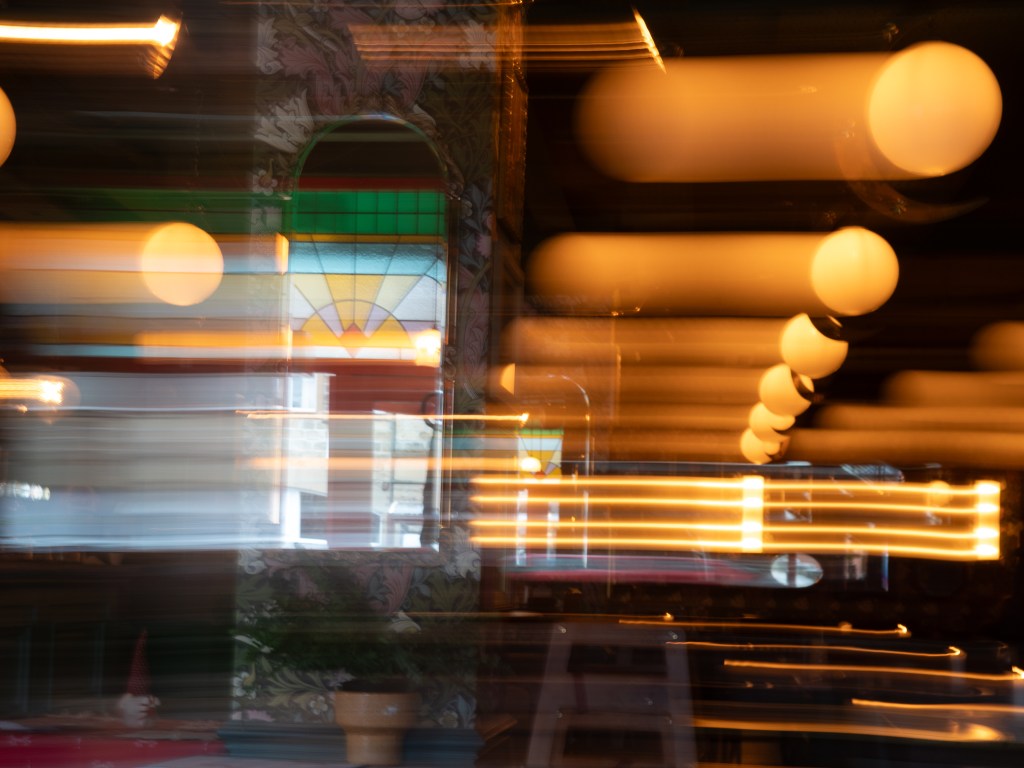
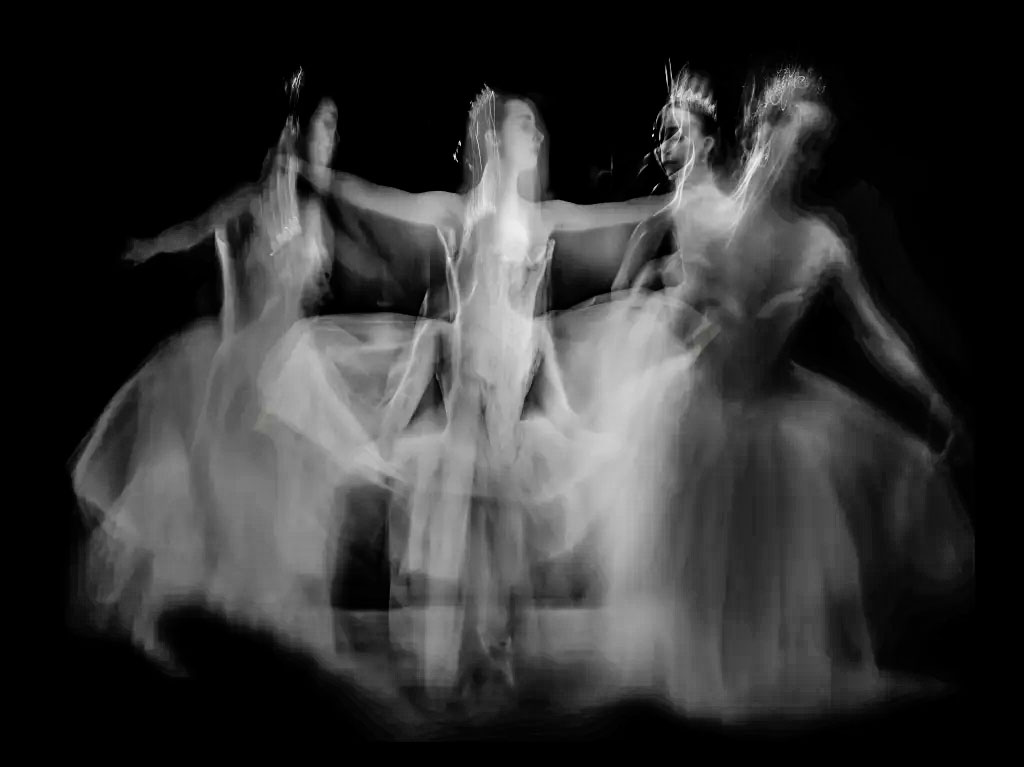
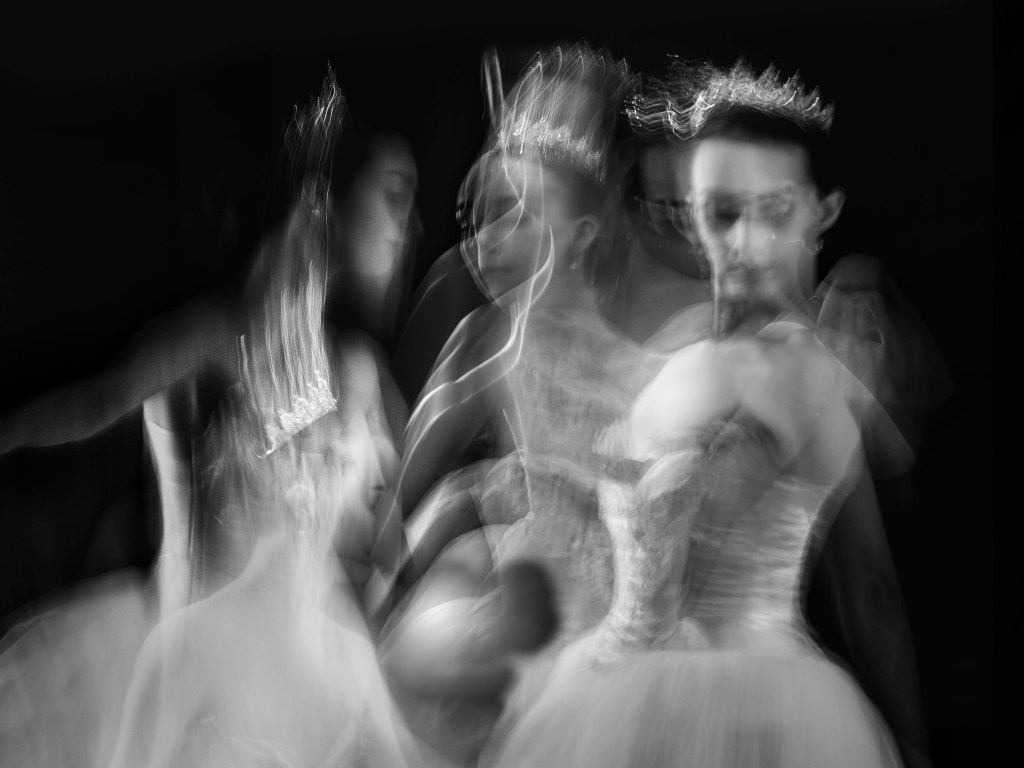
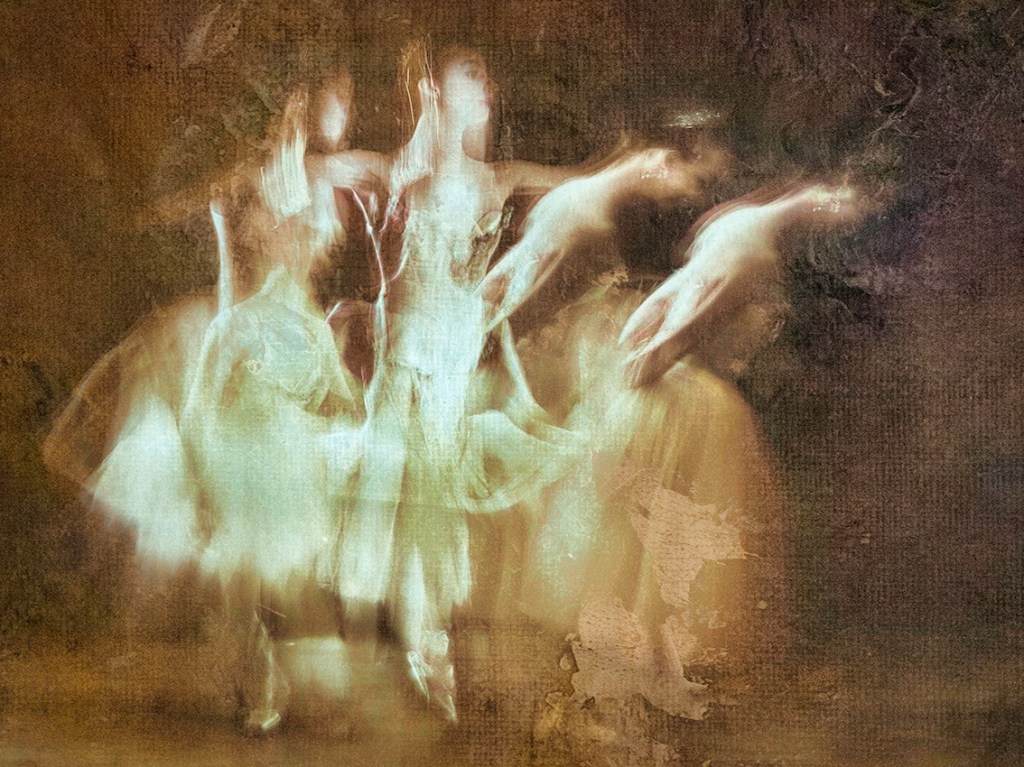
    It is worth considering the work of artists who have pushed the medium in more imaginative directions. The ethereal long-exposure photographs of Olga Karlovac, for example, create dreamlike images that challenge conventional expectations of sharpness and clarity. Looking further back, the photograms of Man Ray demonstrate that photography does not even require a camera to be compelling.

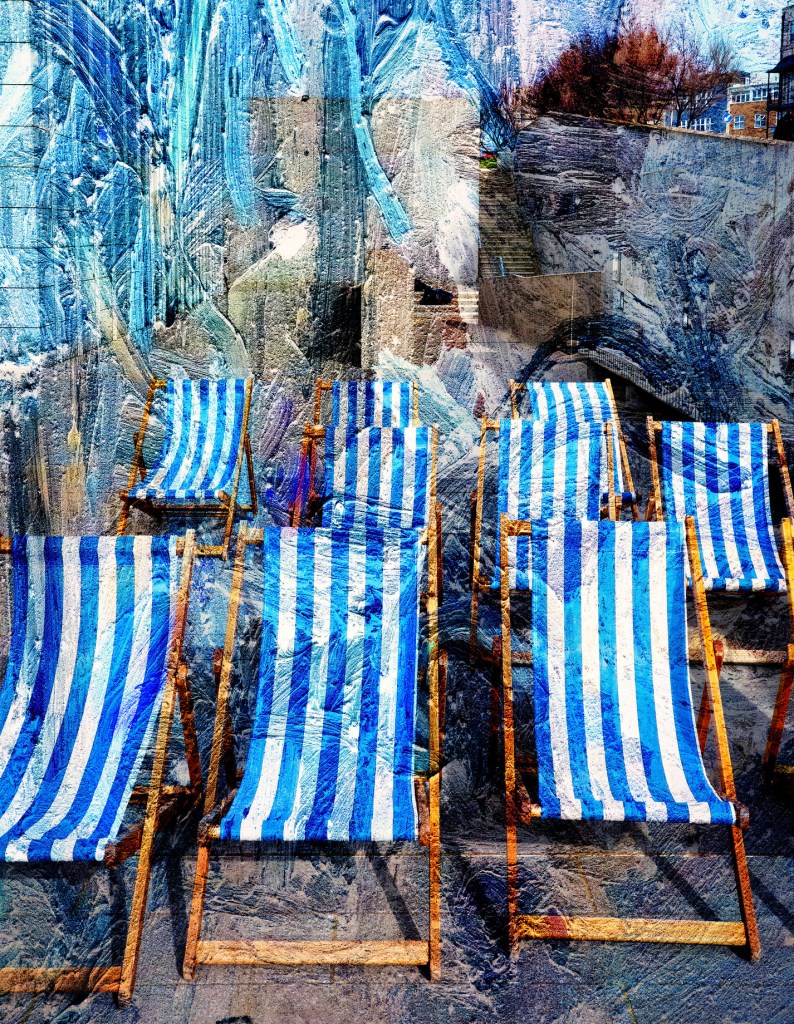
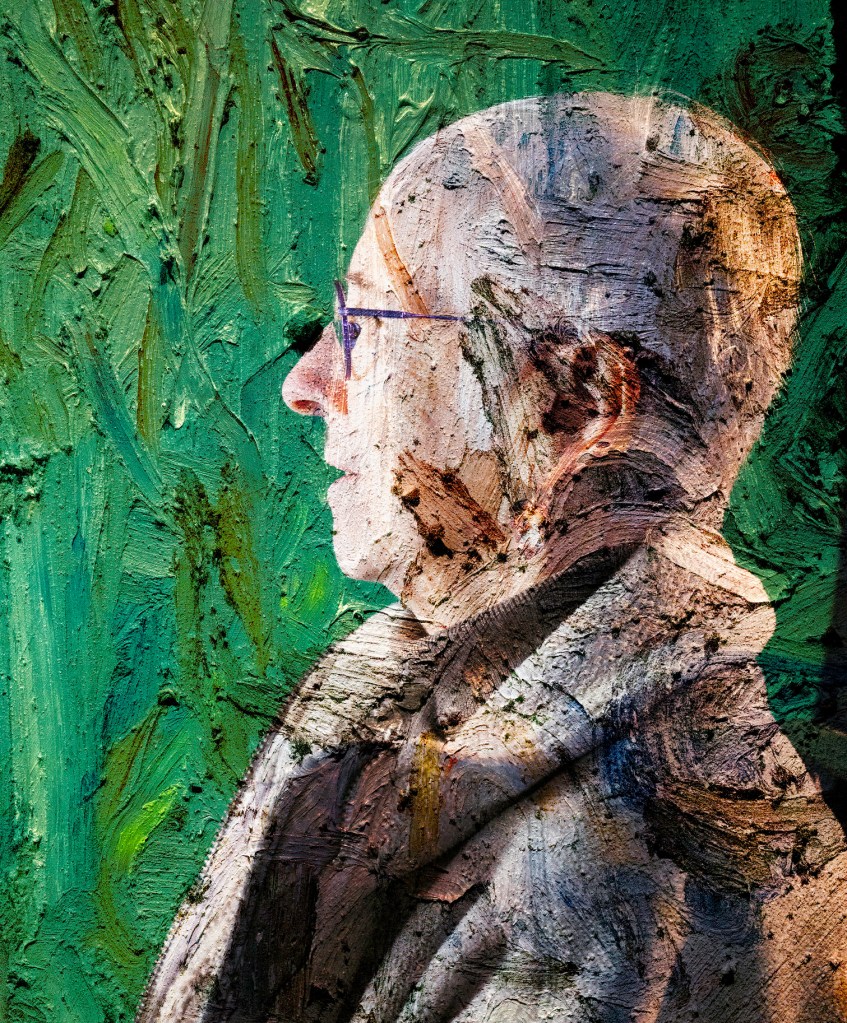
    When photography enters into the kinds of conversations more commonly associated with painting, sculpture, or multimedia practice, it opens up a much richer creative territory. Photography can interact with other materials, processes, and artistic traditions.

    Some might argue that once photography is mixed with other media it ceases to be “pure” photography. But I would argue the opposite. Photography has always been a hybrid process. The traditional darkroom method—light captured on film and then transferred to silver bromide paper—is itself a complex, multi-stage interaction between light, chemistry, materials, and craft.

    Consider the work of Anna Atkins. Her cyanotype prints combine light, chemistry, pigment, and paper in a process that is both scientific and artistic. Few would deny that these works are photographic, even though they involve far more than simply pressing a shutter.

    In this sense, photography may actually be just one element within a much broader creative practice. To narrow it into something we might call “pure” photography risks denying the medium its real power. Photography becomes most interesting when it forms relationships with other media and techniques.

    The same might be said of creativity more generally. Human creativity rarely exists in isolation. It emerges through collaboration, dialogue, and shared influence. Artists are inspired not only by their own experiences and ideas, but also by the work, thoughts, and perspectives of others.

    Perhaps photography should be understood in the same way—not as a closed discipline with strict boundaries, but as part of a wider creative ecosystem.

  • Less Thinking, More Intuition.

    Less Thinking, More Intuition.

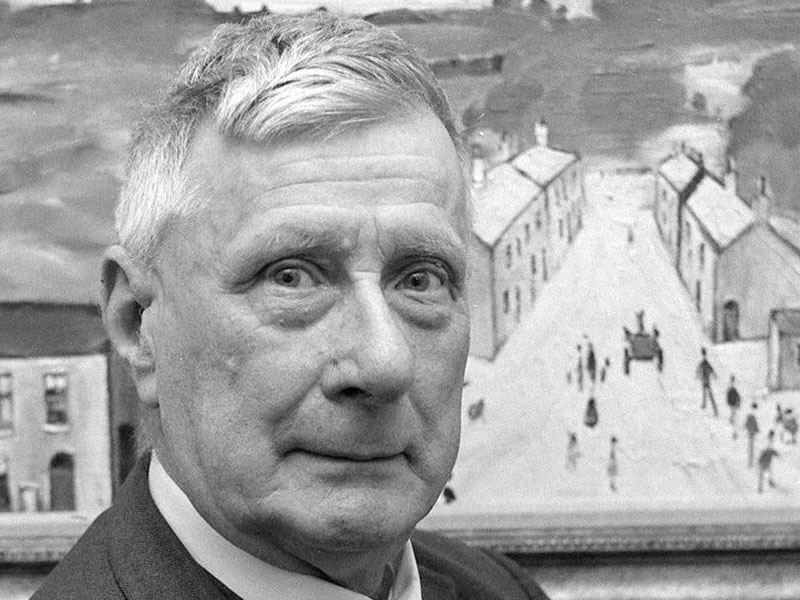
    I was scrolling through Instagram and came across an interview with the late artist L. S. Lowry – the man who painted matchstick men and cats and dogs! I had a fascination with him when I was a child and even thought about travelling to Salford to call on him. I didn’t, unfortunately, but it was quite special to hear from the man himself. (I’ll try and include the video below.)

    In the video, he was asked about the feelings and thoughts he had while painting. In response, he said he might be thinking about lunch or what he would do later in the day. Painting for him was instinctive and automatic. Time passed quickly.

    I am always interested in finding ways to improve my art and photography – but when I see someone who makes it seem so effortless, I wonder why I struggle so much.

    I think my struggles might come from a mindset encouraged by online tutorials. The way art and photography are often taught presents them as mountains of deficiency to overcome. Much of what I see online promotes the idea that creativity is primarily a technical struggle, something to be conquered through formulas and routines.

    To be fair, though, a lot of the teaching I see online is very good and helps to build confidence and familiarity with the tools. Once you know how to handle the camera instinctively, how to adjust settings without conscious effort, your attention is freed. When that happens, you can let your instincts operate more freely. I suppose there was a time when Lowry himself had to learn how to draw and use a paintbrush.

    So I am really hoping that I can reach that state where I am much more instinctive, and photography and art become closer to meditation than construction — less of a struggle.

    Perhaps, for me, the time has come to relax and not think about it too much — just get on with it and see what happens. Although perhaps this blog post is evidence that I do, in fact, think too much!


    My favourite quote from the video, “I wasn’t quite satisfied with that, just too harmless’.

  • The Meaning of Making Photographs

    The Meaning of Making Photographs

    I’ve been agonising over a question that crops up regularly for me: when we create a piece of work, can we truly claim ownership of it, or are we simply attaching our name to something that happened almost by accident?

    It’s really a question about intention. What part do we actually play in making photographs? This theme keeps surfacing in my convesations, perhaps because it touches on my own insecurity about creativity. I take the camera out, point it at something, press the shutter—and then, among dozens of failed images, I occasionally discover a good one. But does that make me creative? Does that make me a good photographer? Do I care?

    In the late nineteenth century, Kodak famously promised: “You press the button, we do the rest.” It was a brilliant slogan. Photography would no longer be complicated or technical; anyone could do it. The machine would handle the hard part.

    But when technology—or sheer luck—produces an image for us, what exactly are we claiming when we call it our work?

    We like to talk about vision and intention. We prefer to believe that the image emerged from somewhere deep inside us, that it reveals our subconscious or our unique way of seeing. That language can sound grand, even pretentious. And yet it’s also true that photographs sometimes happen almost by accident: the light shifts, a stranger walks into the frame, the camera chooses the exposure. Still, we are happy to sign our name beneath the result, or take a competition prize.

    I’m not suggesting that happy accidents are wrong, nor that allowing the camera to do the heavy lifting is somehow dishonest. In fact, one of the most important aspects of art may be recognition. We look at an image and think, Yes—that’s it. In that moment of recognition, the work becomes ours. We adopt it. We see ourselves in it.

    It’s a little like the childhood expression: finders keepers. The accident becomes meaningful because we chose it. We found it. And in choosing it, we gave it significance.

    Perhaps this says something about me. Maybe my photography grows partly out of insecurity. I want to show that I see differently, that I’ve been somewhere interesting, that I possess taste, depth, sensitivity. The camera becomes my way of saying: Look at me. Look where I am. Love me!

    There’s undeniably an element of self-promotion in that.

    And there’s nothing inherently wrong with wanting to feel distinct or valued. But if photography is to mean something more—if it is to anchor us in reality rather than merely decorate our ego—then we must examine our motives. Are we revealing something true, or are we simply curating a version of ourselves?

    Letting the camera “do the rest” is not enough. The real work begins afterwards. It begins when we ask: Why did I take this photograph? What drew me to that moment? What was I feeling? What am I trying to say?

    Photography can become a conversation with ourselves. We take pictures, we review them, we respond, and we change. It becomes iterative—not about producing perfect images, but about developing deeper awareness. Over time, we begin to recognise our preferences, our longings, even our blind spots.

    Creative expression is messy and uncertain. It doesn’t always arise from grand inspiration; sometimes it begins with accident, curiosity, or even vanity. But if we stay attentive, photography can move beyond technology and self-presentation. It can become a slow, ongoing attempt to understand both the world in front of us and the person holding the camera.

    And that final part—the self-understanding—is something no camera can do for us.

  • Photographing in the Rain

    Photographing in the Rain

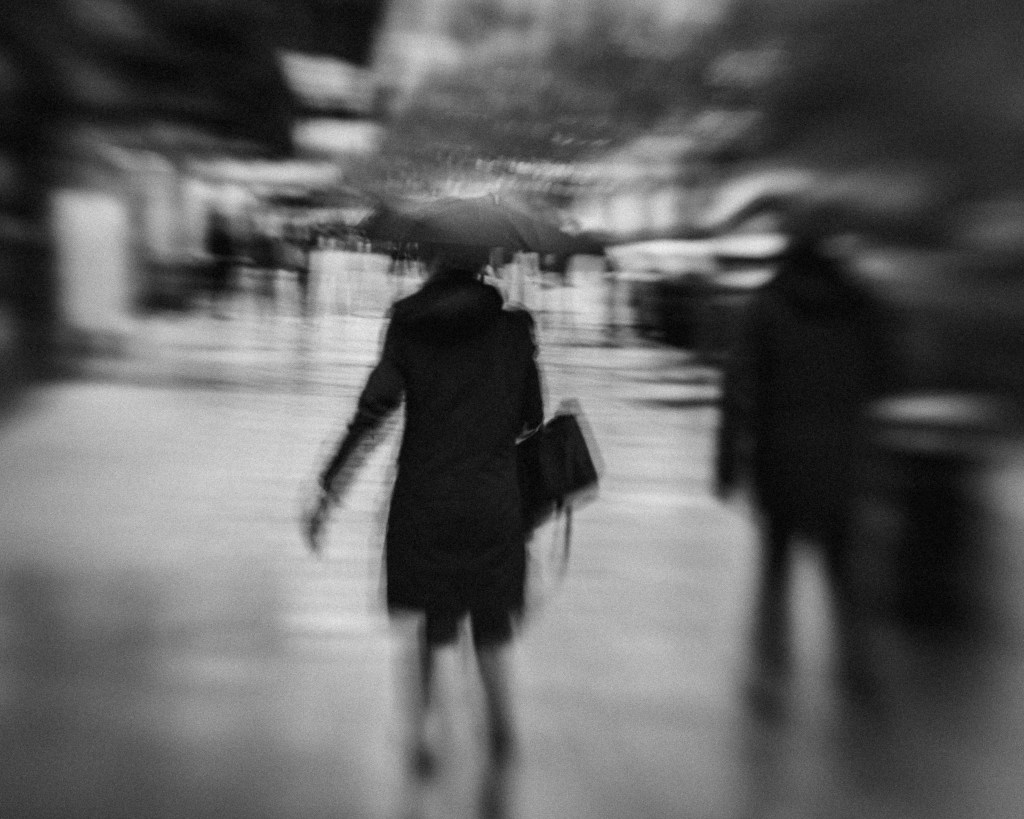
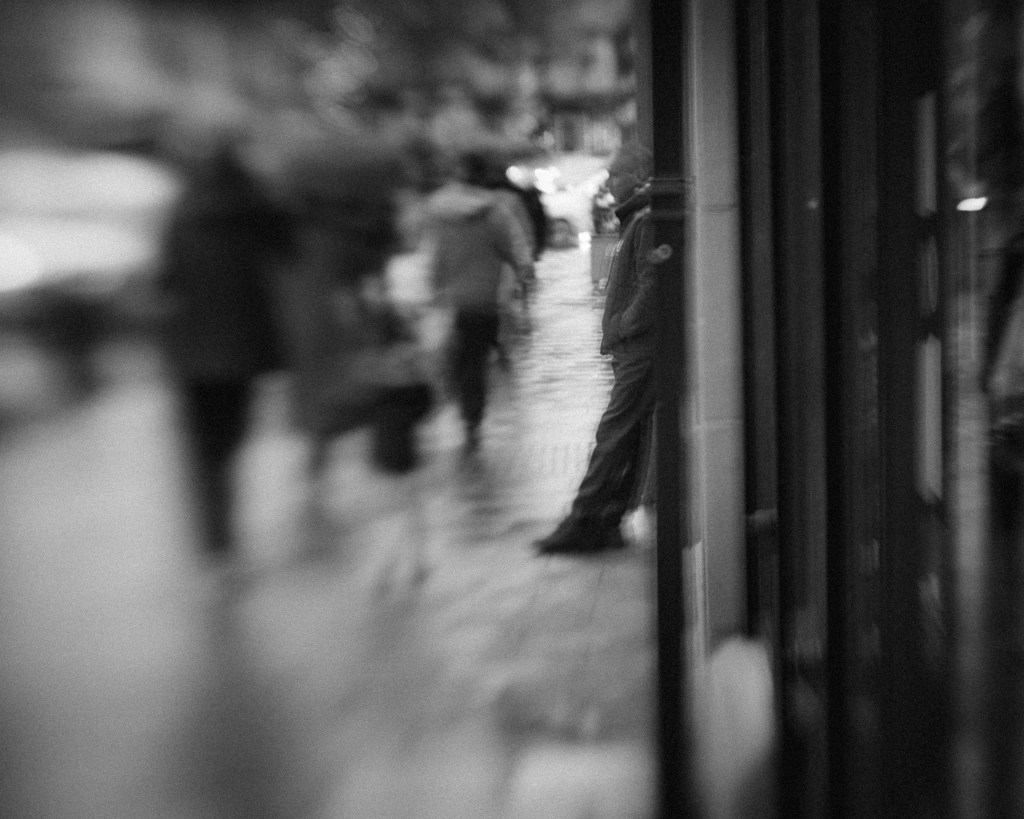
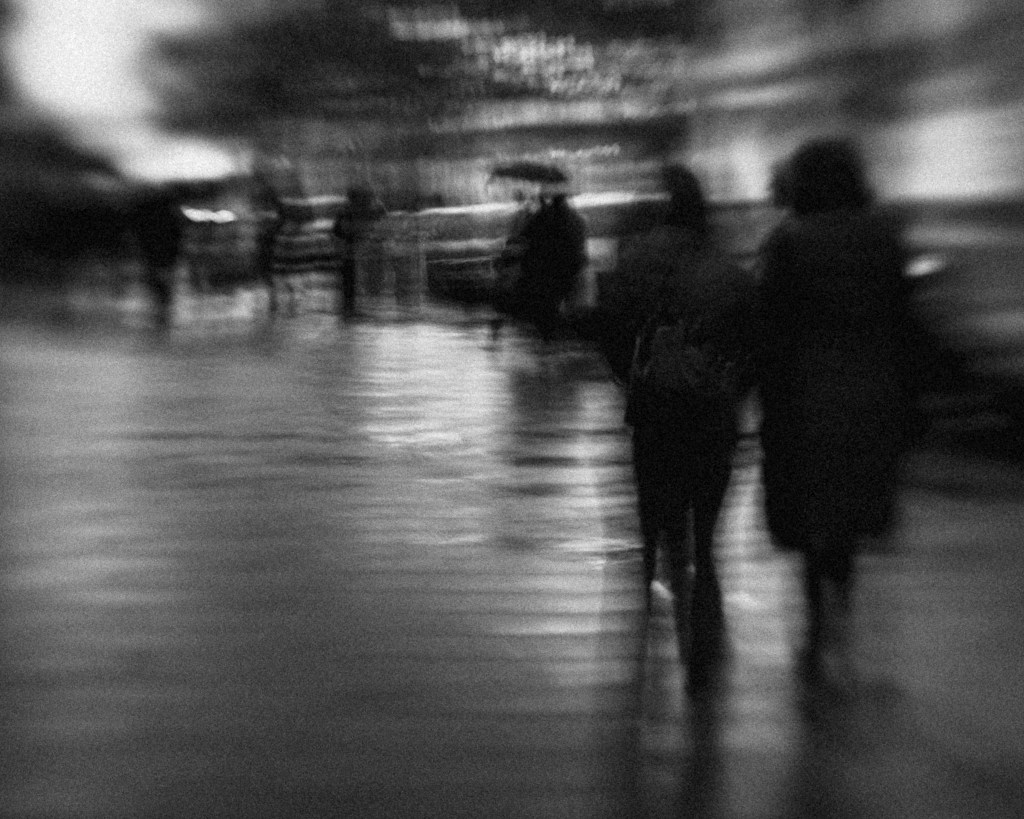
    I was out in the rain today, camera in hand, wandering through the town centre.

    Raincoats and umbrellas everywhere. People striding forward with purpose, determined to reach their destinations before becoming completely soaked. Commuters darting out of the railway station. Would-be shoppers sheltering in doorways. Pedestrians dodging the splash of passing cars. Children being hurried across the crossing, their little legs working overtime to keep up.

    It isn’t the sort of weather most people choose for photography.
    Surely a bright, sunny day would be better?

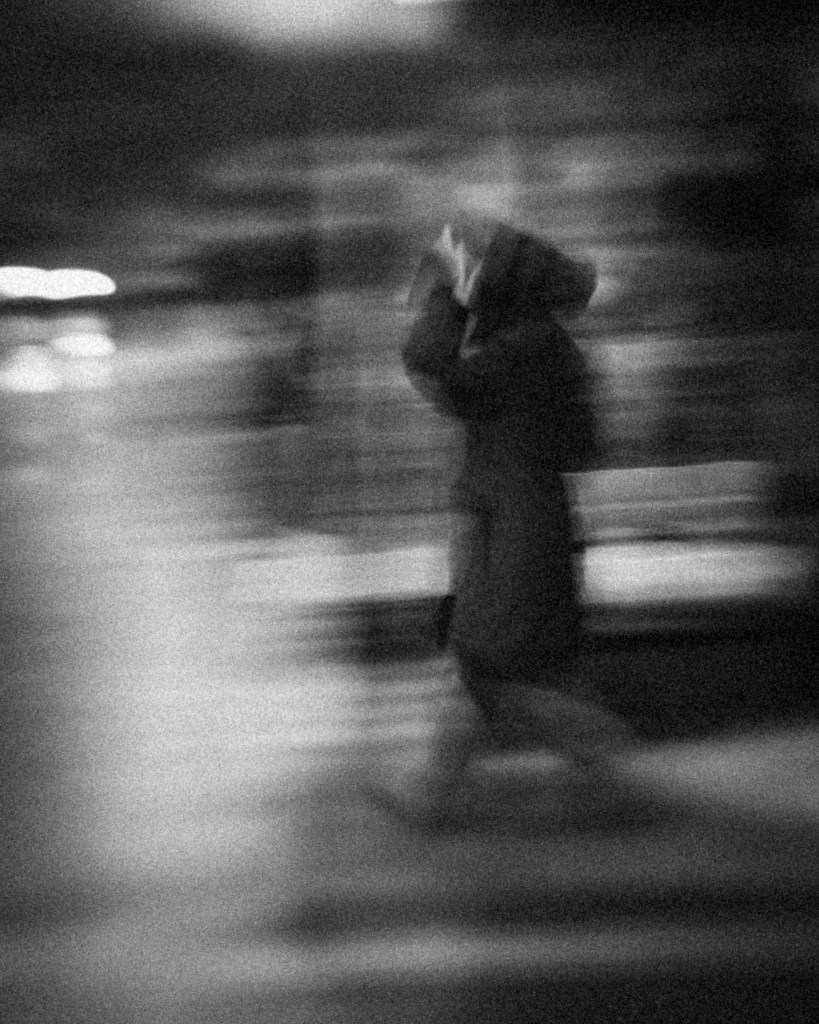
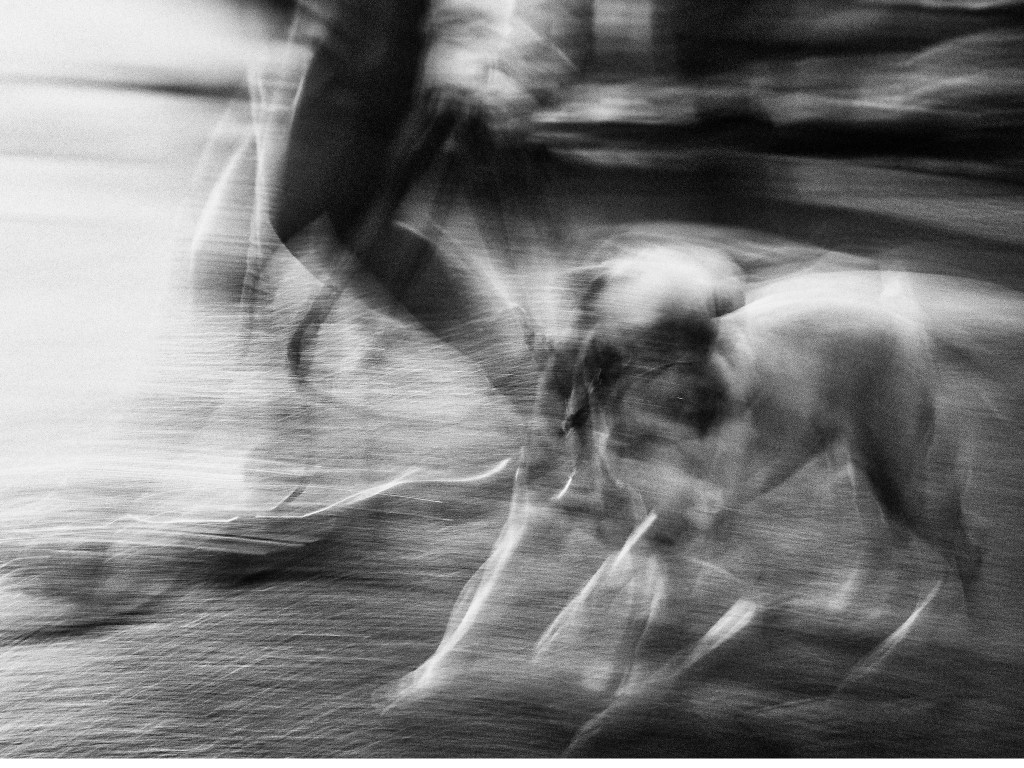
    And then there’s the expectation. Any self-respecting photographer might aim for images that are pin-sharp, colourful, and technically precise. Instead, my photographs today are black and white — dark, moody, slightly unfocused. Fleeting figures passing through the frame. Faces barely recognisable. Motion rather than clarity.

    So why do it?

    Because lately, I’ve been thinking less about what a photograph shows and more about what it feels like. I’m experimenting with techniques without expecting perfection. I’m allowing room to be surprised. I’m chasing a feeling rather than an explanation.

    Yesterday, I had a conversation about how we see. We’re very good at describing what’s in front of us — a street, a person, a rainy afternoon. But isn’t it far more interesting to describe what we feel when we encounter a scene?

    Perhaps our emotional response is a better measure of a powerful photograph than simple visual accuracy.


    The Four Stages of Seeing

    In my mind, the photographic process unfolds in four stages:

    1. Attraction – Something catches our initial attention.
    2. Framing – We compose the scene through the viewfinder.
    3. Selection – We choose which image deserves to be printed.
    4. Reflection – We stand back and look at the finished piece.

    At each of these stages, we often focus on what we’re seeing. But what if we paid equal attention to what we’re feeling?

    It’s almost as if, at our best, we momentarily forget the literal subject and respond instead to shapes, tones, contrast, movement — to atmosphere. To mood.


    A Challenge to See Differently

    My challenge to myself — and perhaps to you — is this:

    Switch off the rational, pre-programmed response that judges what makes a “good” photograph. Become more aware of how an image makes you feel.

    It may be unconventional. It may defy expectations. It may not win prizes for sharpness or colour.

    But if it strikes something deeper — if it lingers — then perhaps it has done something far more important.

    Sometimes, the rain gives us exactly what sunshine cannot.

  • A Studio Session at Ilkley Camera Club

    A Studio Session at Ilkley Camera Club

    Tonight at Ilkley Camera Club we had a fascinating practical studio session with Tabitha Boydell and model Erica Mulkern.

    Tabitha Boydell runs a business offering location shoots in some of the most lavish and visually striking settings around the country. Her events provide access not only to beautiful venues, but also to professional lighting setups, experienced models, and carefully curated costumes. (You can explore her work through her website.)

    This kind of session isn’t something I’ve done before. However, looking through Tabitha’s portfolio, many of the resulting images are truly spectacular.


    More Than Just “Taking the Shot”

    During the evening, Tabitha worked closely with Erica Mulkern to pose and create a studio lighting arrangement for us to use. Sessions like these are necessarily limited — especially when several photographers are sharing time and wanting to practise — but they offer an excellent opportunity to refine technical skills, particularly with strobe lighting, and to work with an experienced model.

    Yet beyond the technical learning, I was eager to explore something deeper.

    In a setting where the location, the lighting, and the model are already carefully prepared, the temptation is simply to “take the shot.” But a photograph is not merely a picture of something attractive. It is the outcome of a relationship — a “dialogue” between the photographer and the subject.


    Entering the Dialogue

    It is relatively easy to photograph something already beautiful: an elegant dancer, a dramatic landscape, a poised model. But what has the photographer contributed? What has been added beyond competent exposure and composition?

    The real challenge in creative photography is not simply to record beauty, but to respond to it — to enter into dialogue with it — and to allow that exchange to shape the final image.

    When photographer and subject truly interact, something new emerges. The subject offers presence, expression, character. The photographer brings interpretation, intention, and vision. The resulting photograph is not merely the sum of these parts, but something unique — a third thing born of that interaction.


    Bringing Ourselves Into the Frame

    In studio sessions like this, the question becomes: is it enough to capture what is placed before the camera, or should we bring something of ourselves into the frame?

    Looking at Tabitha’s portfolio, it is clear that many photographers who attend her sessions do more than document the scene. They add a layer of imagination — a personal response that transforms a well-arranged opportunity into something distinctly their own.

    Perhaps the true challenge, whenever we encounter a beautiful subject, is not simply to photograph it well, but to enter into a kind of conversation: to listen, to respond, and to shape something individual out of that relationship.

    In that sense, photography is less about taking and more about engaging — and the image becomes the visible trace of that conversation.

  • Story, History, and Playing with What’s Next

    Story, History, and Playing with What’s Next

    I had the pleasure of judging two print competitions at the Leeds Photographic Society last night. I loved the buzz of enthusiasm and friendliness. What also struck me wasn’t just the quality of the work, but the depth of the club’s history.

    Founded in 1852, it’s widely regarded as the oldest photographic society in the world — even older than the Royal Photographic Society. That’s quite something in a medium that has changed as dramatically as photography.

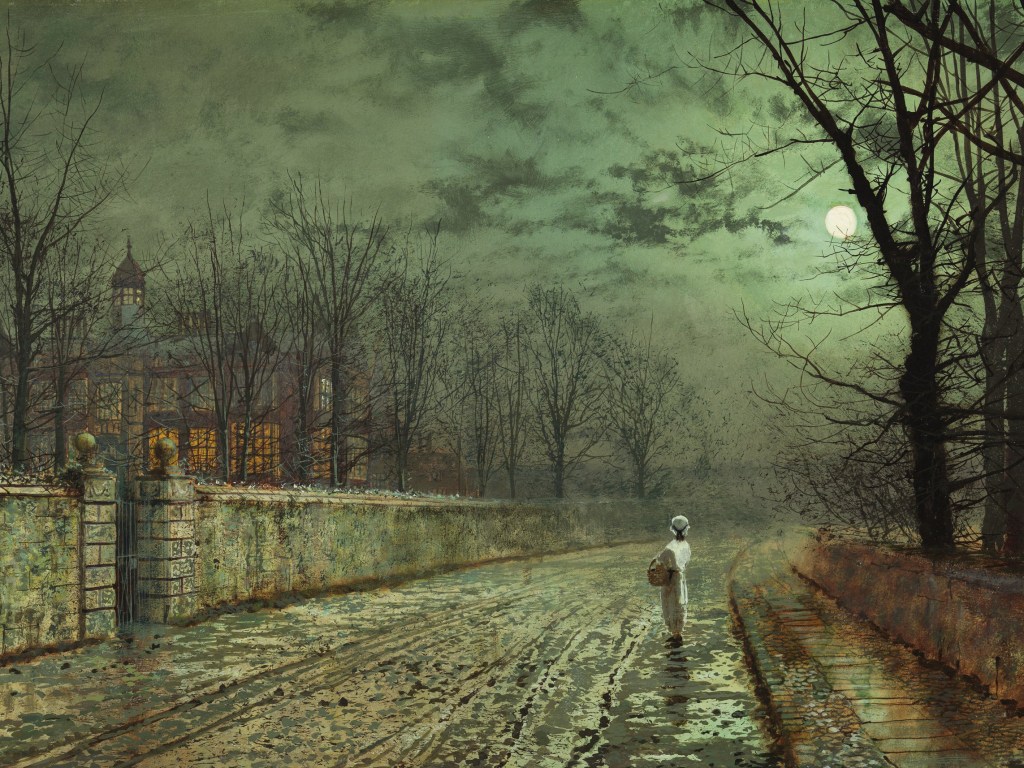
    I was introduced to some of that history recently at Leeds Art Gallery, seeing the work of John Atkinson Grimshaw, who joined the society in 1890. He worked at a time when painting and photography were in creative tension. Rather than resisting photography, he absorbed its influence — especially its handling of light — and let it shape his “moonlight” paintings.

    I’m not nostalgic for the past. There’s no point in trying to go backwards. But story matters. We all stand in the middle of one. The past shapes us, even as we move forward.

    At the competition, one self-portrait had been made using a flatbed scanner. The photographer placed her face on the glass and moved during the scan, creating strange, beautiful distortions. Others used sophisticated digital techniques in Photoshop. Different tools, same spirit: experiment and see what happens.

    It’s encouraging to see the Leeds Photographic Society — and many others — still thriving after so many years. But I sometimes feel that the approach to photographic competitions has remained a little static. Judging often still places heavy emphasis on technical perfection.

    Fifty or a hundred years ago, that made sense. Photography was technically demanding. Mastering exposure, focus, film choice, and the darkroom required real expertise. Technical competence was an achievement in itself.

    Today, technology is far more accessible. Good technical results are easier to achieve. Technical standards are now the starting point, not an end in themselves, as I’ve said before.

    Perhaps that’s the thread running from Grimshaw’s time to ours. The question isn’t how to preserve the past, but how to respond to what’s in front of us. If Grimshaw were alive today, I doubt he would ignore new technology. He would probably be playing with it.

    So how can these clubs and societies move forward while drawing on their past? How can they appeal to a new generation of photographers?

    I think the spirit of creativity is alive and thriving for those who are prepared to experiment — whether it’s sticking your face in a scanner, light painting with a torch at night, or taking photographs in the manner of J. M. W. Turner in the middle of a storm. Photography and creative expression should be exciting, and perhaps even dangerous.

    I hope the Leeds Photographic Society can keep the spirit of John Atkinson Grimshaw alive — not as a place of comfort and familiarity, but as a call to embrace the new and unfamiliar. To create something not seen before.

  • You Can’t Buy Photographic Excellence

    You Can’t Buy Photographic Excellence

    As I continue my journey in photography — particularly through critique sessions where we analyse images in detail — I’m finding myself increasingly weary of how much time we spend discussing technical aspects.

    There’s so much hype around camera equipment and its supposed ability to deliver technically perfect results. Sometimes I worry that we’re being hoodwinked into believing that “off-the-shelf excellence” can simply be purchased by upgrading to the latest gear.

    When I watch YouTube videos or scroll through Instagram, I’m inundated with adverts promising that this lens, that camera body, or some new accessory will elevate my photography. But the truth is, most of this equipment will not upgrade my photographic excellence — unless it comes with a brain transplant.

    A Refreshing Perspective

    That’s why it was so refreshing to attend a photo judging session with David Oxtaby the other night.

    While he acknowledged technical excellence, he made it clear that the real priority was emotional impact. That struck a chord with me. In the end, I sincerely believe it’s the emotional connection we feel with an image that truly matters.

    Technique Is the Starting Point, Not the Summit

    I want to be careful here. I’m not criticising the pursuit of technical excellence. In fact, I’ve written before that technical skill is essential — but it’s a starting point, not an endpoint.

    Once we’ve mastered the basics of exposure, focus, and composition, we’ve reached base camp. From there, we look up at the mountain. The real climb begins when we strive to express our stories, feelings, and identities through our photographs.

    Photographic excellence cannot be bought from Sony, Fujifilm, or Canon. It comes from passionate engagement with artistic expression — from the effort to create work that is emotionally engaging and culturally meaningful.

    Judging with the Heart as Well as the Head

    I’m currently judging another competition for a camera club in Leeds. Inspired by David’s session last week, I’m trying to be more deliberate in my approach — to slow down, meditate on each image, and pay attention to my emotional response.

    It may be that I’ll be criticised for not focusing heavily enough on technical aspects. My decisions may seem subjective. But if photographs are meant to strike deeper into the soul — if they are meant to move us — then technique alone is not enough.

    I do worry that I might confuse some people. But I’ll do my best to explain my reasoning. And perhaps there will be a few kindred spirits who align with my belief that truly powerful photography is not just seen — it is felt.

  • Reflections on Judging a Camera Club Competition

    Reflections on Judging a Camera Club Competition


    Last night I had the pleasure of judging at a local camera club, and I came away with several reflections I’d like to share.

    First, the club itself deserves real credit. It is friendly, welcoming, and clearly growing in membership. There is a wide range of ages and photographic interests represented, and it stands out as one of the most welcoming clubs I’ve judged at. It appears well organised, and the competition entries showed a broad spectrum of experience and ability. But drawing from my experiences over the last year of so …

    The Confidence Question

    One story I hear again and again when visiting clubs is that competitions tend to be dominated by a small core of regular winners. Those with less confidence often hesitate to enter at all.

    Confidence is a real issue. Competitions can, unintentionally, become divisive. They can create a perceived hierarchy — a sense that some members are “better” than others. This can become self-fulfilling: the confident members grow stronger and more assured, while the less confident gradually withdraw.

    That is not healthy for any creative community.

    The Double-Edged Nature of Competition

    I have genuinely enjoyed judging competitions over the last year or so. In fact, it has improved my own photography. Being required to articulate what makes a strong image forces clarity of thought. And when I cannot define precisely why an image works, I’ve learned to relax into that mystery rather than cling rigidly to rules.

    Competitions are, in many ways, a double-edged sword.

    On the positive side:

    • They encourage participation.
    • They stimulate engagement with club activities.
    • Judging can promote technical learning and progress.

    But we must also be aware that the very mechanisms that make competitions effective can, if unchecked, become corrosive.

    When Photography Becomes a Sport

    In some instances, club photography begins to resemble a sport. League tables, points systems, and rankings can feel uncomfortable. Elevating particular individuals to near-celebrity status may satisfy some egos, but it risks distorting the purpose of the club.

    Judging outcomes are inevitably limited. They are shaped by:

    • The subjective views of the judge.
    • A relatively narrow set of criteria designed to ensure fairness.

    Ironically, those criteria can sometimes reduce photography to a prescriptive formula — encouraging rule-following over artistic exploration.

    That said, I do not wish to be overly negative. For many members, the competitive element is exciting, stimulating, and rewarding. It adds energy and focus.

    But we must remain mindful of those who feel excluded by it.

    Risk-Takers and Rule-Followers

    Over the years, I have seen many innovative and creative photographers willing to experiment and take risks. They produce unusual, sometimes challenging work. If that work is dismissed because of technical “imperfections,” those individuals may feel discouraged.

    This creates two broad tendencies:

    • Those who conform to established rules and feel rewarded.
    • Those who experiment and feel undervalued.

    Of course, this is a generalisation. Reality is more nuanced. But the risk is real enough that we should be alert to it.

    Returning to Founding Values

    Camera clubs and photographic societies would benefit from revisiting their founding values.

    If a club genuinely aims to be open and to encourage photographic progress — not just personal achievement, but the development of photography itself — then it must embrace a wide range of approaches, styles, and philosophies.

    Photography has transformed radically since its inception, particularly in recent years with digital techniques and artificial intelligence. We cannot afford to judge as though we are still in the Victorian era.

    Creating Space for Creative Flourishing

    The priority, as I see it, is to create an environment in which creative people can flourish — and be rewarded for taking risks and breaking the mould.

    Photography should not stand still as an art form. Nor should our personal practice become stagnant. We want to feel the breeze of constant freshness moving through our work — an ongoing excitement about how photography can evolve and be deployed in new ways.

    A Thoughtful Way Forward

    In conclusion, camera clubs might consider:

    • Revisiting and updating their core values.
    • Reflecting carefully on how competitions are structured.
    • Designing categories and themes that are open enough to encourage surprise and originality.
    • Ensuring participation is as wide and inclusive as possible.

    Competitions can remain an important and vibrant part of club life — but only if they serve creativity rather than constrain it.

    If we get that balance right, camera clubs will not only nurture skilled photographers — they will nurture brave ones.

  • What Are You Really Trying to Say With Your Photographs?

    What Are You Really Trying to Say With Your Photographs?

    In my photography, I’ve always been drawn to the challenge of balancing two things: the strength of the content and the form of its presentation. I was brought up on the idea that content is king—but the longer I’ve worked with photographs, the more I’ve realised that we don’t always stop to ask what we actually mean by content.

    For me, content is not just what appears in the frame. It’s the message, the idea, or perhaps the story that the photograph is trying to express. Sometimes this is obvious and explicit; other times it’s subtle, implied, or left open. Strong content doesn’t shout—it steps forward quietly and invites the viewer to participate, to spend time unpacking what the image might be about.


    When Technique Takes Over


    When we’re out taking photographs, we’re not always conscious of content at all. It’s easy to be seduced by the visual appeal of a subject: the light, the colours, the textures, or how neatly it might fit into a well-composed frame. We’re often led to believe that a good photograph is one that is technically accomplished—sharp, well-exposed, carefully presented.

    Of course, technical skill matters. But there’s a risk here. When technical evaluation dominates, it can overshadow the quieter, more elusive qualities of meaning. A photograph can be visually impressive yet say very little. And without realising it, we can end up photographing how things look rather than what they might mean.

    Shifting the Emphasis Toward Content

    So how do we, as photographers, shift the emphasis away from surface appearance and towards content?

    One approach I’ve found helpful is surprisingly simple: learning to articulate, in words, what we have seen and what we are trying to achieve. Think about how exhibitions are often accompanied by an artist’s statement—an explanation of ideas, intentions, and approaches. Many of these statements are probably written after the work is finished. But I wonder whether there’s value in being able to speak about our intentions before or during the act of photographing. Not just for an audience—but for ourselves.

    Photography as a Question, Not an Answer

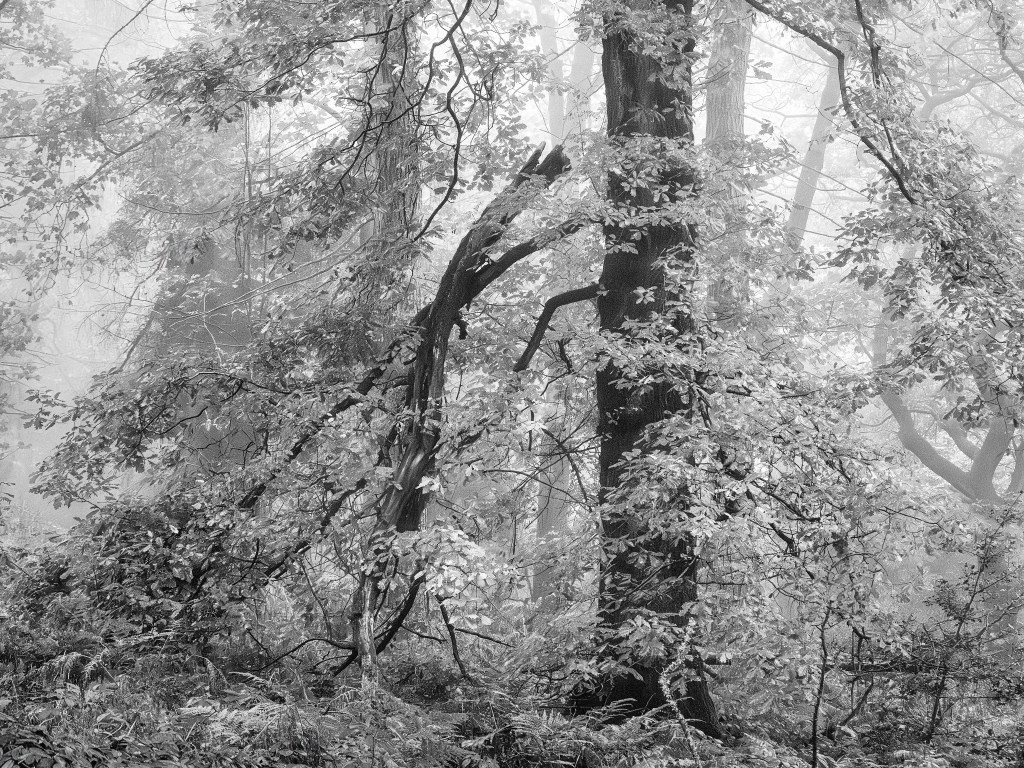
    Take something as ordinary as spending time photographing a local woodland. On the surface, the aim might seem obvious: to make beautiful images of trees, light, and landscape. But what do I really hope to come away with? What am I drawn to, again and again?

    For me, I’ve been trying to embrace the complexity of the woodland as a metaphor for the complexity of community life. I’m interested in how different elements coexist—how plants, animals, decay, growth, life, and death are all interwoven in cycles of dependency. Holding this idea in mind helps shape what I notice, where I linger, and what I choose to photograph. And hopefully, it carries something of that intention through to the final images and on to the viewer.

    Leaving Space for Mystery

    That said, there’s a balance to be struck. We don’t want our intentions to become so rigid that they close down the possibility of discovery. Photography thrives on accident, surprise, and moments we couldn’t have planned. Being too prescriptive can turn an open exploration into a narrow checklist.

    But a loose written or verbal statement—a starting point rather than a rulebook—can be incredibly useful. It can guide us toward work that feels more personal, more intentional, and perhaps even more distinctive. It gives us something to push against, return to, or gently abandon as the work evolve.

    Ultimately, learning to articulate what we’re trying to achieve isn’t about limiting our photography. It’s about giving it depth—and giving ourselves permission to look, think, and photograph with greater purpose.