I had the pleasure of judging two print competitions at the Leeds Photographic Society last night. I loved the buzz of enthusiasm and friendliness. What also struck me wasn’t just the quality of the work, but the depth of the club’s history.
Founded in 1852, it’s widely regarded as the oldest photographic society in the world — even older than the Royal Photographic Society. That’s quite something in a medium that has changed as dramatically as photography.
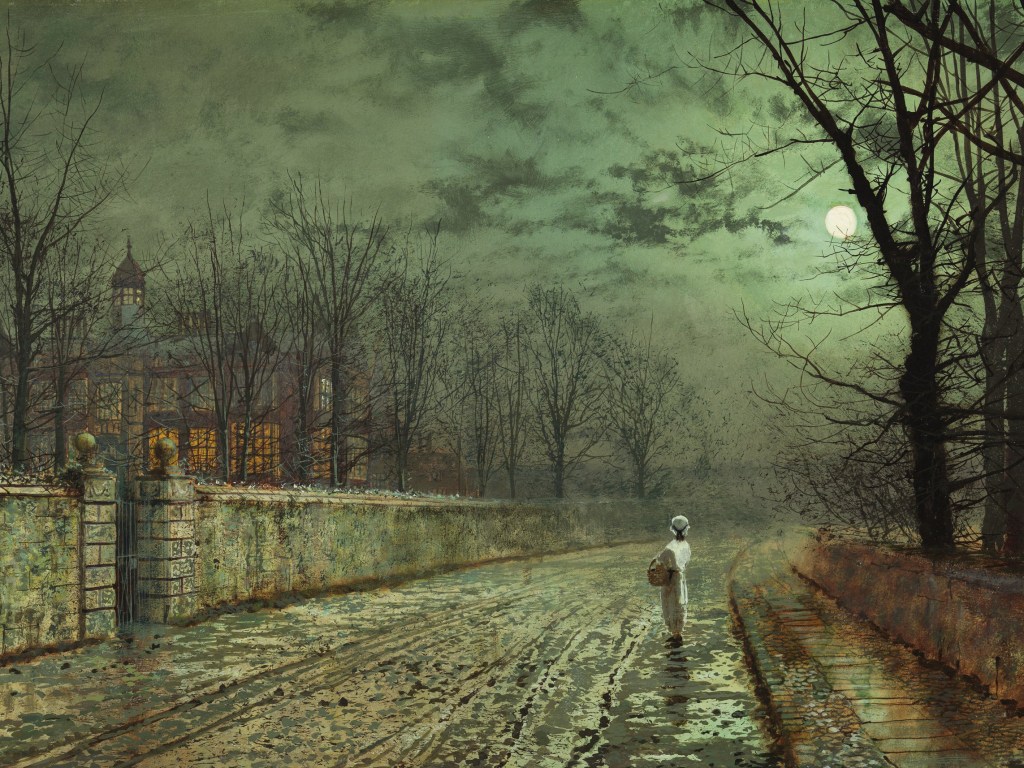
I was introduced to some of that history recently at Leeds Art Gallery, seeing the work of John Atkinson Grimshaw, who joined the society in 1890. He worked at a time when painting and photography were in creative tension. Rather than resisting photography, he absorbed its influence — especially its handling of light — and let it shape his “moonlight” paintings.
I’m not nostalgic for the past. There’s no point in trying to go backwards. But story matters. We all stand in the middle of one. The past shapes us, even as we move forward.
At the competition, one self-portrait had been made using a flatbed scanner. The photographer placed her face on the glass and moved during the scan, creating strange, beautiful distortions. Others used sophisticated digital techniques in Photoshop. Different tools, same spirit: experiment and see what happens.
It’s encouraging to see the Leeds Photographic Society — and many others — still thriving after so many years. But I sometimes feel that the approach to photographic competitions has remained a little static. Judging often still places heavy emphasis on technical perfection.
Fifty or a hundred years ago, that made sense. Photography was technically demanding. Mastering exposure, focus, film choice, and the darkroom required real expertise. Technical competence was an achievement in itself.
Today, technology is far more accessible. Good technical results are easier to achieve. Technical standards are now the starting point, not an end in themselves, as I’ve said before.
Perhaps that’s the thread running from Grimshaw’s time to ours. The question isn’t how to preserve the past, but how to respond to what’s in front of us. If Grimshaw were alive today, I doubt he would ignore new technology. He would probably be playing with it.
So how can these clubs and societies move forward while drawing on their past? How can they appeal to a new generation of photographers?
I think the spirit of creativity is alive and thriving for those who are prepared to experiment — whether it’s sticking your face in a scanner, light painting with a torch at night, or taking photographs in the manner of J. M. W. Turner in the middle of a storm. Photography and creative expression should be exciting, and perhaps even dangerous.
I hope the Leeds Photographic Society can keep the spirit of John Atkinson Grimshaw alive — not as a place of comfort and familiarity, but as a call to embrace the new and unfamiliar. To create something not seen before.
 Mark Waddington
Leave a comment