In my photography, I’ve always been drawn to the challenge of balancing two things: the strength of the content and the form of its presentation. I was brought up on the idea that content is king—but the longer I’ve worked with photographs, the more I’ve realised that we don’t always stop to ask what we actually mean by content.
For me, content is not just what appears in the frame. It’s the message, the idea, or perhaps the story that the photograph is trying to express. Sometimes this is obvious and explicit; other times it’s subtle, implied, or left open. Strong content doesn’t shout—it steps forward quietly and invites the viewer to participate, to spend time unpacking what the image might be about.
When Technique Takes Over
When we’re out taking photographs, we’re not always conscious of content at all. It’s easy to be seduced by the visual appeal of a subject: the light, the colours, the textures, or how neatly it might fit into a well-composed frame. We’re often led to believe that a good photograph is one that is technically accomplished—sharp, well-exposed, carefully presented.
Of course, technical skill matters. But there’s a risk here. When technical evaluation dominates, it can overshadow the quieter, more elusive qualities of meaning. A photograph can be visually impressive yet say very little. And without realising it, we can end up photographing how things look rather than what they might mean.
Shifting the Emphasis Toward Content
So how do we, as photographers, shift the emphasis away from surface appearance and towards content?
One approach I’ve found helpful is surprisingly simple: learning to articulate, in words, what we have seen and what we are trying to achieve. Think about how exhibitions are often accompanied by an artist’s statement—an explanation of ideas, intentions, and approaches. Many of these statements are probably written after the work is finished. But I wonder whether there’s value in being able to speak about our intentions before or during the act of photographing. Not just for an audience—but for ourselves.
Photography as a Question, Not an Answer
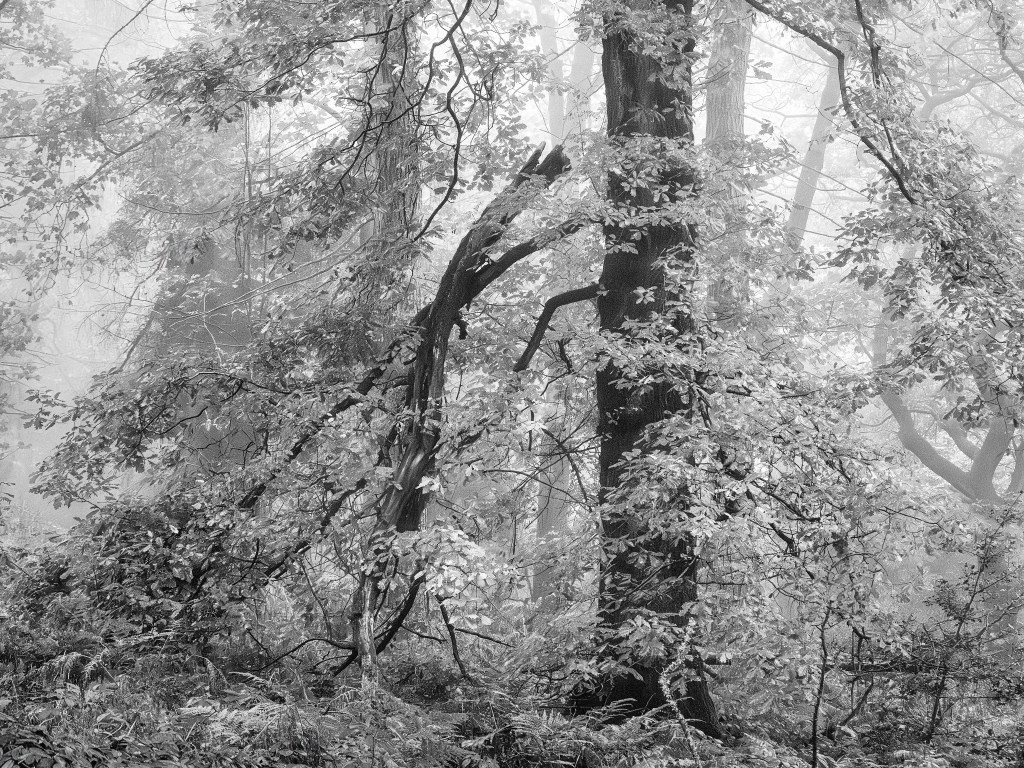
Take something as ordinary as spending time photographing a local woodland. On the surface, the aim might seem obvious: to make beautiful images of trees, light, and landscape. But what do I really hope to come away with? What am I drawn to, again and again?
For me, I’ve been trying to embrace the complexity of the woodland as a metaphor for the complexity of community life. I’m interested in how different elements coexist—how plants, animals, decay, growth, life, and death are all interwoven in cycles of dependency. Holding this idea in mind helps shape what I notice, where I linger, and what I choose to photograph. And hopefully, it carries something of that intention through to the final images and on to the viewer.
Leaving Space for Mystery
That said, there’s a balance to be struck. We don’t want our intentions to become so rigid that they close down the possibility of discovery. Photography thrives on accident, surprise, and moments we couldn’t have planned. Being too prescriptive can turn an open exploration into a narrow checklist.
But a loose written or verbal statement—a starting point rather than a rulebook—can be incredibly useful. It can guide us toward work that feels more personal, more intentional, and perhaps even more distinctive. It gives us something to push against, return to, or gently abandon as the work evolve.
Ultimately, learning to articulate what we’re trying to achieve isn’t about limiting our photography. It’s about giving it depth—and giving ourselves permission to look, think, and photograph with greater purpose.
 Mark Waddington
Leave a comment