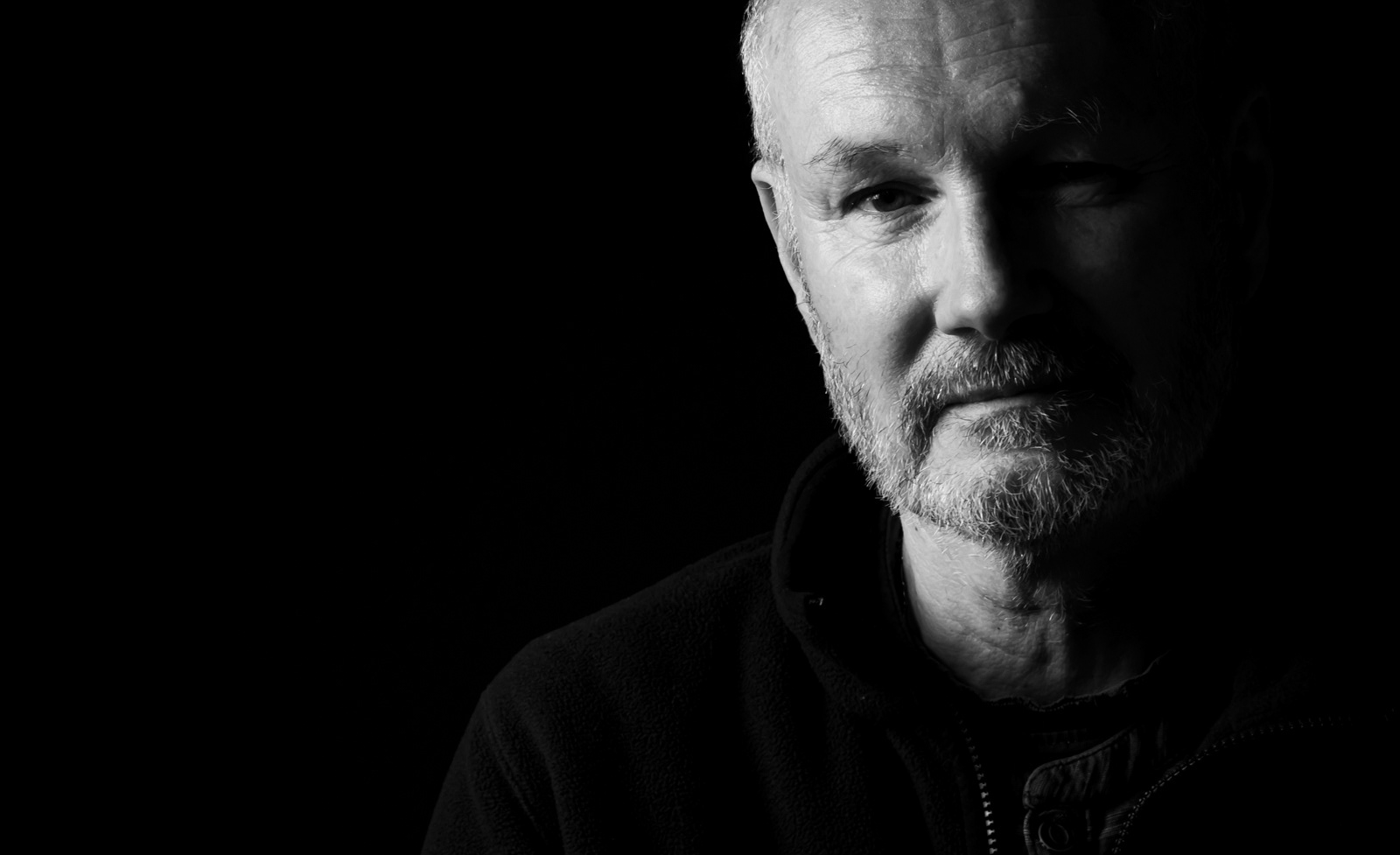
About Me
Producer and media engagement encourager. Ilkley, West Yorkshire
A passion for for photography and digital communication with a background at the BBC and ITV.
Currently director at the School Media Club making cinema films for schools and working for Oblong Leeds a community development organisation. Also a member of All Saints Church in Ilkley and involved with communications in the parish.
This blog features posts about photography including some of my photos, while the media posts will include thoughts about filmmaking and online media - particularly to do with PR activities.
read moreSchool Media Club
Categories
search
Category Archives: Media
Some good foundations for running a social media campaign through your supporters
For anyone devising a social media campaign you can do worse that re-visit Social Pulpit Barak Obama’s Social Media Toolkit. I know that maybe you’re not running for world domination just yet but there are a few pearls in it.
This ancient toolkit is well documented and discussed, and maybe you’re already familiar with it but if not here’s the gist.
Laddering support through tiers of engagement
They become a follower, engage with the discussion, join a group, then become an advocate.
Empowering Superusers
Offering further support to the committed advocates – the connectors
Providing source materials for user-generated content
Videos, speeches, photos and how-to guides
Going where the people are
Concentrate on the most influential networks and use tools and language people are familiar with.
Ensuring that people can find your content
Making the content discoverable.
Mobilising supporters through mobile devices
Mobile is now an even more essential part of the mix.
Harnessing analytics
Constantly listening and improving outreach materials.
Essentially it’s about giving people on the ground the resources and tools, and trusting them to spread the word.
It’s good stuff and you can download the in depth document here
Also posted in Online, Tips
Leave a comment
Some notes on online communications – apologies to Mrs Waddington
I’ve been thinking about community websites lately and my conversations with local churches getting more regular. Already today I have found myself in a huddle discussing Twitter, Facebook and web design. Apologies to Deborah who assumed that I have Sundays off from all this
These are just jottings from a couple of conversations.
- Some websites fail because they are seen as a dumping ground for random information and links. Ones with a single minded focus and purpose are much stronger. A purpose might be, ”to engage with people outside the organisation and grow membership”. A statement like this would determine the choice of stories, language, design etc.
- Confusion often about whether the site is outward or inward looking – aimed at engaging with new people, or there to serve the internal organisation. An outreach would fail if the content is muddled with material that has little relevance for an external audience.
- Some websites are seen as an isolated activity disconnected from other communications platforms like social media, newsletters, notice boards etc. Much better if there is an wider communications plan and that the activities are linked together – editorially, technically and in terms of design.
- Website design is more than trendy graphics and buttons. A simple layout and clear navigational hierarchy is as much a part of the design. Commercial templates often provide elements which confuse rather than clarify the brand. Much better to choose an unobtrusive and clean template and then focus on the navigational structure, excellent copywriting and photography.
- Economical writing, story structure and a balanced layout of text and images is a very rare to find. Possibly because the writers have little inclination or knowledge to address these aspects.
- The inclusion of consistently presented images and video is a daunting technical obstacle for many publishers. The use of Vimeo and Flickr for hosting and embedding video and photos (rather than uploading directly to the website) is a good option and provides further linkage to social promotion.
- Twitter is good for directing users TO stories on your website. Facebook is a good place to publish stories FROM your website for sharing and discussion.
- Always include a call to action or opportunity for further engagement in a posting.
Not advice just notes. Feel free to contradict of comment in any way.
Cutting the costs of ITV regional news. Perhaps more accessible?
I’m very interested to see how the professional media world is merging with consumer level media. Calendar News, part of the ITV news network, is using online tools that are accessible to everyone.
The ITV online news channel is basically a blog populated by videos hosted not by ITV but using Vimeo. Vimeo is a free video orientated social media channel a bit like Youtube.
I’m not sure what this does for the brand image of ITV as a big player, but it may be seen as a means of making the service feel more accessible and “ordinary”. I don’t have a problem with this especially if the journalism stands out as being excellent. ITV‘s great strength in Yorkshire is its approachability in my view.
The great news is that for any aspiring journalists, you can create a news website which follows this model and uses these very tools. The next step, I imagine, is to encourage the participation of citizen journalists in ITV’s news coverage – a step we began to take when my team established ITV Local Yorkshire a few years back but proved too expensive at the time.
Another interesting aspect is that if you have a Vimeo account you can get statistics about how many people have viewed the videos and for how long – introducing a daring competitive element.
Also posted in ITV
Tagged blog, blogging, calendar news, citizen journalists, itv, journalism, media, news, news website, reporting, television, Video, vimeo
Leave a comment
Video to promote business. Why a multi media page layout can have the most power.
Video is a tremendously powerful way of communicating. An engaging video can provide a human, emotional connection with an organisation. A video can explain services that are difficult to bring alive in text. Video can cross language boundaries. It is a superb way of communicating, but it is not the only way and needs friends.
Looking at Video Connected. This is a fledgling offering which provides short videos to promote local businesses. I’m trying to understand why this is a good idea. It’s interesting that they see an opportunity to promote businesses using video but I’m not sure about a promotional site that ONLY does video; how is it different from YouTube?
To be fair I think Video Connected is good because it has clear geographical areas, the videos have links for further information, and there are social media buttons. But a big challenge for them will be to get a high volume of locally relevant videos.
The whole point about different forms of media is that they have particular strengths and no one form provides a universal answer.
Readers need a mix of approaches presented in the same space. Magazine layouts consist of headlines, graphics, paragraphs, photos. The eye is drawn into the page and around its content. We are seduced to look at adverts or intrigued by ingenious headlines. The difficulty with a video page is that you can’t actually see the videos until you play them. So text plays a vital role in drawing the audience in. Video is less immediate thank text.
Video is great at showing you things that are difficult to explain in words or still images. A video that shows actions and sequences can be really valuable for a product demonstration. A video testimonial works well because you can see body language and the sparkle in the eye as a customer recommends a product.
So let’s think about it.
- Text: Good for hard facts and data. Stories in which good writing is sufficient to conjure up an image. Provocative headlines.
- Graphics: Great for arresting attention and delivering key messages.
- Stills: Good for identifying people, locations, products. Adding colour and variety to a web page.
- Video: Good where movement is part of the story, or for understanding sequences. Watching people as they speak to assess non verbal communication. Where English is a second language.
- Audio: The audio element of a video is perhaps the most important and often underrated aspect. The interplay between movement and musical rhythm can provide a powerful emotional connection.
I am yet to be convinced by a video only offering. I love multimedia page layouts where stories are told and supported by different kinds of media in the same space. You feel that there is a richness of possibilities. One message supported by a range of approaches.
Of course there is a place for video as a stand alone item, but only where is promotes links to other media. A viral video which catches the attention in a dramatic or intriguing way, and then links to a web page is an effective strategy. But this strategy only works by sharing the movies across sites.
I admire Video Connected for promoting the use of video. However, I think video’s dynamic relationship with other forms is essential if it is to have the power it undoubtedly has. By taking a multimedia approach to layouts it becomes possible to simplify the video and focus on its strengths; movement and sequences of action, interplay between sound and pictures.
Also posted in Video
Leave a comment
Social Media for the Voluntary & Public Sectors @ No1 Leeds
Many thanks to VCS Learning for putting on the social media event at i2 offices on Whitehall Road I was there representing Oblong Leeds
@tomriordan
Tom Riordan CEO Leeds City Council spoke about his use of Twitter to help people understand the work of the council and to help change perceptions. He explained that some people had an impression of the council as being inaccessible – Twitter is a way for him to open up the council.
Twitter also makes him accessible as a CEO, and said that he always responds to Twitter messages. He was aware that some users engage in negative snipes but said he always responds politely.
I was encouraged that Tom Riordan sees Twitter as an interactive tool rather than simply a means of broadcasting. He was quite clear to say that he uses Twitter to get a feel for prevailing opinions and get feedback. A listening CEO of a council. And because Twitter is so instant he can be ahead of the game, “even beats the 24 hour news channels”
Some benefits include seeing his organisation from a range of perspectives, extending his own networks and linking with other people and organisations which can inform his decision making.
Twitter is also very good at alerting council staff to important news and in some ways fulfils the function of a newsletter.
He said that council leader Keith Wakefield was a new convert to twitter and that it is the former Twitter cynics that might make the best tweeters.
The verdict on Facebook was less favourable which he reserves for personal interactions and doesn’t talk about business. Facebook he said can be problematic – all too easy to say something embarrassing. Linked in he uses to gather people into his network and sometimes to engage interesting groups – but not to do much posting.
@AlexSwallow
Alex Swallow founder of Young Charity Trustees spoke next. He went through some solid and sensible uses of social media.
But the thing that struck me was that without social media his organisation probably would not have existed. Young Charity Trustees can exist without and office, without being registered as an organisation, have no paid staff, no printed materials and no costs.
–
So, social media is an important brand building and PR tool. You can create and organisation’s identity and presence in the wider world. You can give the public insights into your organisation, making the walls invisible. You can change perceptions You can listen to your customers and stakeholders and form new partnerships. You can manage your own press coverage and tell the world what you had for tea.
We will fight them on the channels – what YouTube is doing to take on the broadcasters.
This is an interesting development, with YouTube going to launch channels for content made by big production companies.
The main broadcasters have been pushing up the quality of their prime time offerings with HD and next 3D, period dramas etc – this could be to differentiate themselves from all the other video washing around. The idea was perhaps that you watch YouTube on your PC and on your phone, but the TV is reserved for something better. However…
It seems that YouTube is now playing the quality game. Presumably to differentiate itself from something else.
All the providers are aiming to be platform independent – so you get drama on your phone and youtube on Your TV.
A lot of people for years have been saying that TV channels will die – i heard that predicted on the Today programme only a few weeks ago. I see no sign of it. I think TV channels are the supermarket packaging that will help consumers identify content and with which they will build loyalty. There are many emerging examples of channels and micro channels – blogs are among them, made up of original content on a theme and in a style.
Mainstream broadcasters commission a large part of their output from external production companies, but now those same companies might be making programmes for YouTube. It’s going to be a bit like saying Coke and Pepsi are the same stuff just in different branded bottles. A BBC programme is not necessarily made by the BBC or even seen on the BBC. All very confusing. Labelling and packaging of the programmes and channels will be critical.
Adopt the voice of Churchill for this next bit….
Big channels are where broadcasters can assert their authority though high editorial and presentation standards. These channels will be the place to go for significant, well timed cultural events. Families and friends will rush home to catch the big show. Twitter will be alive with conversation around scheduled events and the nation will believe it is one. WE WILL FIGHT THEM ON THE CHANNELS.
Anyway, read more about it in the Telegraph (a channel) here YouTube takes aim at broadcasters with 60 new channels
Video Story Telling – a 10 week course free for some applicants
If you know of anyone in Leeds who would like to take advantage of a superb video story telling course, please pass on the information.
The course will run for 10 weeks from the 7th of November and will be a script to screen practical guide. It’s aimed at beginners so all you need is to be interested. The course is FREE for some applicants, so please ask about this.
Video Story Telling begins Wednesday the 7th November at the Woodhouse Community Centre, Leeds LS6 2NY. email markw@oblongleeds.org.uk
There are still places left but because it’s a valuable course offered free to some people we expect it to be over subscribed.
Why sex crimes are bad for brand image and best not talked about.
Why has there been a failure to deal with sexual exploitation, and why are cities, businesses and communities underplaying the possible scale of the problem on their doorstep? Jimmy Savile has had a lifetime of exposure and it seems baffling to many that this has not been dealt with before now.
There are many cases, I am sure, in which child abusers have got away with crimes over many years. Why, for example, have some priests got away with this in spite of belonging to a caring and moral communities? The fact that that they have the opportunity to commit the crimes doesn’t explain why they have been able to cover up the evidence. You can understand why the victim would want to remain silent, they have been exploited and controlled. But what is the responsibility of organisations and communities to speak out about problems on their patch and make sure this doesn’t happen? Perhaps the answer lies in self interest and corporate reputation?
The scenario: a respected organisation or community has at its heart an “evil” monster who is committing terrible crimes. The implication is that the community as a whole is not perfect and that somehow they have allowed this to happen. Furthermore this terrible presence reflects very badly on the image they are trying to reflect to the wider world. In Savile’s case the corporate image and the person where inextricably linked. While a community may not wilfully cover up such crimes, there is a terrible price to pay by exposing them. Subconsciously, individuals may so believe the brand image of an individual, community or organisation and be in denial that anything like this could possibly happen. We believe our own marketing.
The entertainment industry (and perhaps the church in some cases) is built on brand image. Entertainers like Jimmy Savile invent themselves to fit into the expectations of the industry – DJs, TV presenters, chat show hosts to some extent relinquish individuality in order to make their careers. The pressure to conform to these stereotypes is a terrible pressure and it is not surprising that some go off the rails. Savile was uniquely not himself.
I wouldn’t want to claim any special experience, but I have encountered a few high profile entertainers who have seemed very close to the edge. One was an ageing international film star whom I caught with a young woman- but no names. In the entertainment industry there is sometimes a denial of a person’s true identity and individuality which is very sad. There are very powerful public assumptions about who these people are and what they represent. The priests and TV celebrities who committed crimes were trusted figures who were revered and had power over those who follow them. This reverence and power is not without significance.
In Sheffield we are putting the finishing touches to a film which attempts to promote some discussion around the sexual exploitation issue. It’s aimed at teenage boys and is called “Can We Talk About This”. The film discusses the facts and experiences of sexual exploitation, but most importantly addresses the key issue – we are all reluctant to talk about sexual exploitation.
Cities around the UK are competing like mad for a positive brand image. The ideal city is prosperous, clean and great for families; The perfect city provides equal opportunity for all, and public safety is near the top of the list. It’s not surprising therefor that any city would like to avoid a unique association with sexual exploitation or any other public disaster. Rochdale is a fine part of the world but the recent sex trials will undoubtedly be bad for business.
This unwillingness to go anywhere near the problem impedes our ability to deal with it in practical terms. In any city there are areas where young people are routinely picked up by organised groups for sexual exploitation. One solution would be to publicise the danger areas of the city and to explicitly warn the the public, but just imagine the outcry from commercial businesses located in these areas. According to some figures, at any one time there are many thousands of children caught up in sexual exploitation but very few are brought to justice. We must do better.
The protection of our young people requires that we admit that there’s a problem and that those in authority set their own interest aside when dealing with these crimes. They may threaten our strategic brand image, but let’s see if the PR departments are big enough to handle it.
We as a community may only see the world as we want to see it and deny anything which is unpleasant. The challenge is to open our eyes, to be brave enough to acknowledge truth and to deal with realty.
New 10 week film making course in Leeds
Here’s a heads up on a course we’re running at the Woodhouse Community Centre in Leeds. Please alert anyone you think might be interested.
On Wednesday the 7th of November we will begin a new 10 week filmmaking course to be run at the Woodhouse Community Centre in Leeds. The sessions will run between 4pm and 6pm
The tutor on the course will be Abdul Rahman Al-Marsumi formerly of the BBC and with many years experience of teaching.
The course will cover
- The language of film and video
- How to understand the theme
- Story boards and story telling
- Composition
There will be a strong practical element with student creating their own film sequences.
The course is likely to be over subscribed, but if you would like to express and interest in this course we can send you more information.
Use my Oblong email address markw@oblongleeds.org.uk
Creative media courses at Oblong in Leeds
Thought I’d update you in the media projects I’m involved with through Oblong in Leeds
Oblong is a community development charity based at the Woodhouse Community Centre in Leeds. The charity manages the newly refurbished centre, runs community development projects and supports the personal development of volunteers. As part of this we are steadily growing the Media Collective which provides learning and development opportunities for volunteers interested in various aspects of media.
In the coming weeks we are starting a number of courses which are aimed at giving small organisations and individuals the tools to communicate in the digital environment. The courses include an introduction to WordPress websites, photoshop and photography and video production.
An introduction to Photoshop
This is a new ten week introductory course in Adobe Photoshop
Mondays from 3.30pm to 5.30pm starting 1st October.
An introduction to WordPress
This is a new two week introductory course for WordPress blogs and websites.
Two Wednesdays from 4.00pm to 6.00pm from 10th October and the following week.
Film-making
This is an eight week course starting early November and will be a script to screen cover the essential techniques involved in making short films.
If you live in the Woodhouse area of Leeds and know of anyone who would benefit please get in touch. markw@oblongleeds.org.uk
Also posted in Creativity, Film, Oblong, Photography, Video
1 Comment


